Tag: Styles

  • Zircon Jewelry: Yay or Nay?

    Zircon Jewelry: Yay or Nay?

    Key Takeaways

    Zircon can be a beautiful, distinctive choice when you understand what you are buying and how you plan to wear it.

    • Natural zircon is a genuine gemstone, while cubic zirconia is a different lab-created material.
    • Zircon offers lively fire, varied colors, and accessible pricing.
    • Its durability is respectable but calls for more care than diamond.
    • Cloudiness, scratches, treatments, and setting quality affect the buying decision.
    • Zircon is most worthwhile when personal style matters more than investment value.

    What Exactly is Zircon Jewellery?

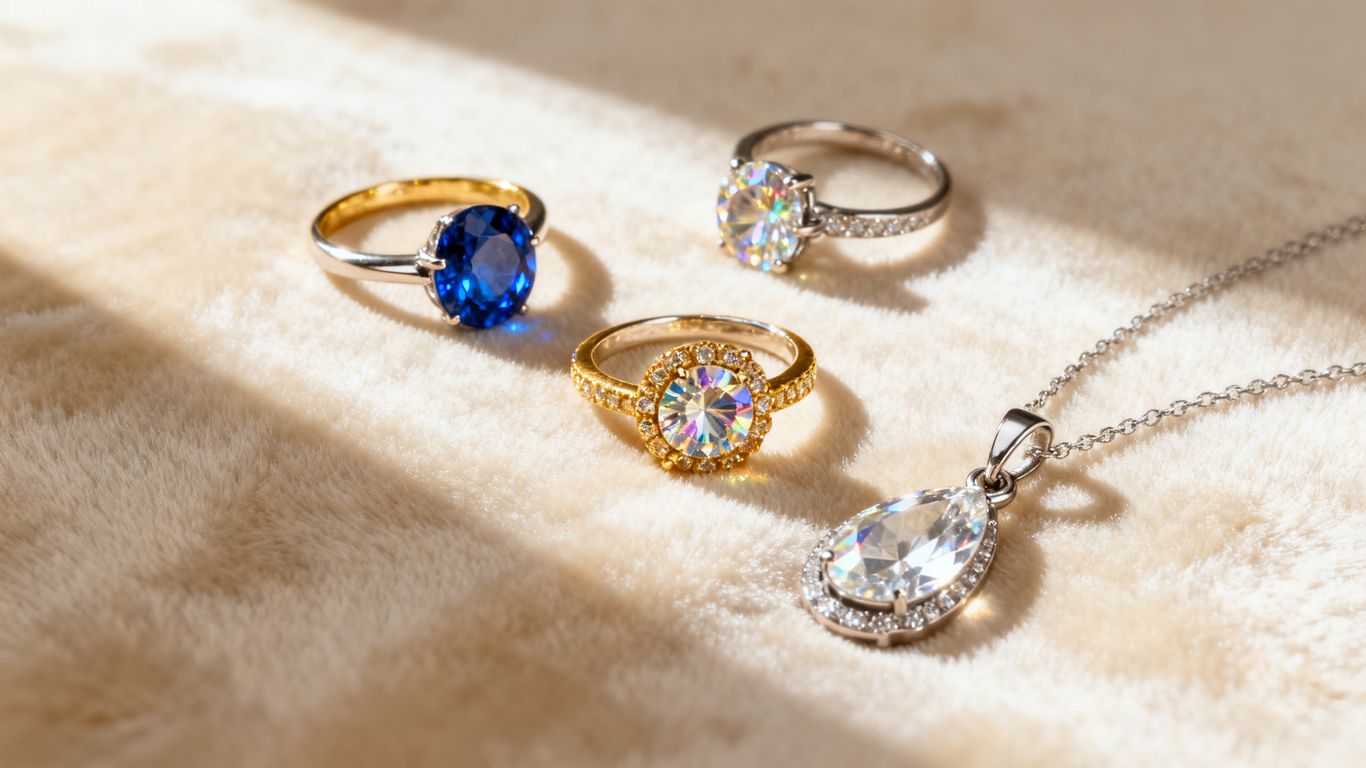
    Zircon jewellery uses zircon, a natural gemstone that occurs in several colors, including blue, yellow, green, red, and brown. Its bright luster and strong dispersion can create flashes of color as it moves in the light. Because the name sounds close to another popular stone, shoppers sometimes assume zircon is simply a diamond substitute or a type of imitation. Knowing the difference is the first step toward judging zircon gemstone quality fairly.

    Natural Zircon vs. Cubic Zirconia (CZ)

    Natural zircon forms in the earth and has its own mineral composition and crystal structure. Cubic zirconia, usually called CZ, is a separate lab-created material made to resemble diamond. They may both appear bright in a ring or pendant, but they are not interchangeable stones, and zircon vs cubic zirconia value depends on different considerations.

    A natural stone may carry interest because of its color, clarity, cut, origin, and rarity. CZ is generally chosen for an affordable look rather than for the characteristics of a mined gemstone. For a useful visual overview of colors, cuts, and setting considerations, this natural zircon guide is a helpful starting point.

    The label on a product listing deserves close attention. Ask whether the description means natural zircon, cubic zirconia, or simply a clear decorative stone, and check whether any treatment is disclosed. That small bit of care prevents disappointment later, especially when comparing a stone’s appearance with its price.

    The Pros of Buying Zircon Jewellery

    The appeal of zircon is not limited to its low price. A well-cut stone can look animated and rich, while its colors give shoppers more room to choose something personal than a conventional colorless stone. For buyers who want jewelry that feels distinctive without stretching the budget, zircon can be a sensible option.
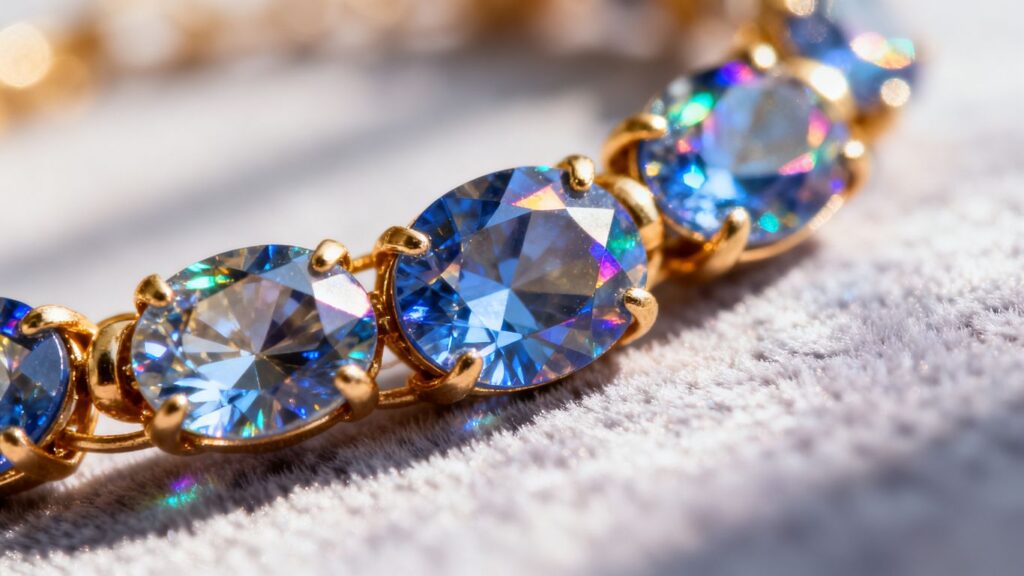
    Blue and golden zircon jewelry in sunlight
    Blue and golden zircon jewelry in sunlight

    Affordability and Accessibility

    One of zircon’s clearest advantages is that it can offer a gemstone appearance at a more approachable price than many high-demand alternatives. The final cost still depends on color, size, clarity, cut, treatment, metal, and workmanship, so “zircon” alone does not establish a fixed price. A careful shopper compares the full piece rather than judging value from carat weight alone.

    At BuyJewelleryOnline.net, buying advice and jewelry reviews are designed to help online shoppers compare pieces before purchasing. A zircon buying guide can also be useful when you are weighing natural stones against CZ listings and checking what a seller has actually described.

    Sparkle and Brilliance

    Zircon is known for lively brilliance and noticeable flashes of spectral color, particularly when it has been cut to make good use of its luster. This gives it a look that can feel bright and lively rather than flat. Whether it is a good diamond alternative depends on your expectations: it can provide impressive sparkle, but it remains a different gemstone with different care needs.

    Cut quality matters more than a generic promise of shine. Look at the stone in several kinds of light, paying attention to whether the center looks bright or dark and whether the facets return light evenly. A lively cut changes everything about how a modestly priced stone looks on the hand.

    Variety in Styles and Designs

    Zircon’s range of natural colors makes it adaptable to everyday jewelry, occasion pieces, and birthstone gifts. Blue is especially familiar, but warmer tones and unusual colors can create a more individual look. It works in rings, earrings, pendants, and bracelets, provided the setting suits the stone and the intended wear.

    When comparing designs, these practical details make the choice easier:

    • Choose a protective setting for a ring that may receive frequent knocks.
    • Consider earrings or pendants if you want lower-contact everyday wear.
    • Check whether the metal color complements the zircon’s natural or treated color.
    • Look for clear disclosure of stone type, treatment, dimensions, and return terms.

    That short list keeps style and practicality together. A dramatic color may be the reason you notice a piece, but the setting and wearing habits determine whether you continue enjoying it.

    The Cons of Buying Zircon Jewellery

    Zircon is attractive, but it is not a completely carefree stone. Its relative hardness does not make it immune to abrasion, and its faceted edges can be vulnerable when a piece is worn roughly or stored with harder jewelry. The pros and cons of zircon jewelry become clearer when you consider daily routine, not just the first impression in a product photograph.
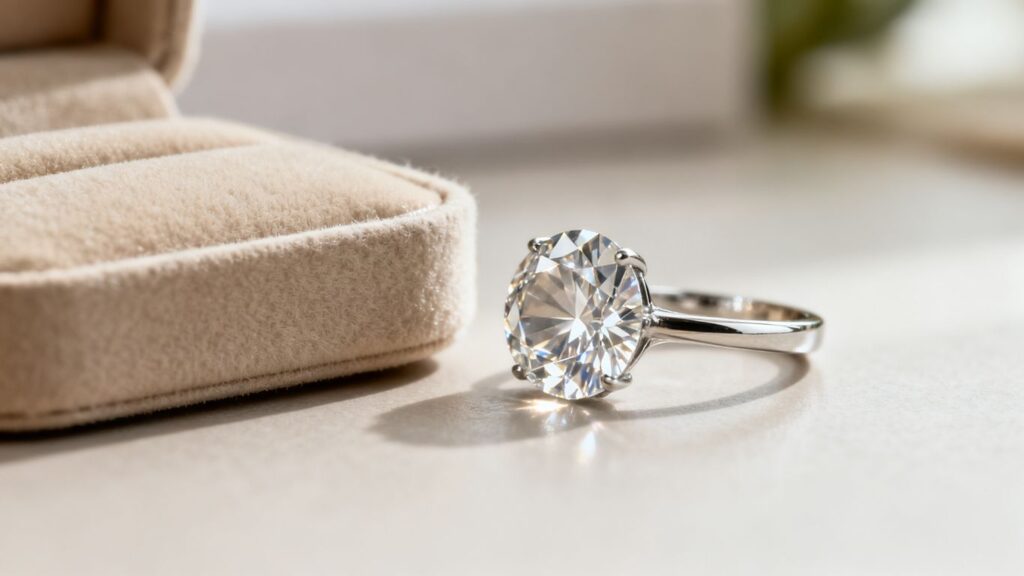
    Faceted zircon ring beside a soft jewelry pouch
    Faceted zircon ring beside a soft jewelry pouch

    Durability Concerns

    Zircon is suitable for jewelry, yet it can be more brittle and less scratch-resistant than a diamond. Rings receive the most contact with desks, counters, door handles, and other objects, so a zircon ring deserves more caution than a pendant or pair of earrings. The durability of zircon stones is therefore adequate for considered wear, rather than a promise of indestructibility.

    For a piece worn often, use a setting that gives the stone support and avoid wearing it during sports, heavy cleaning, gardening, or manual work. A simple care routine is easier to follow when it matches your lifestyle:

    1. Remove zircon jewelry before activities that may cause impact.
    2. Keep each piece separate so stones and facet edges do not rub together.
    3. Clean it gently with mild soapy water and a soft cloth.
    4. Have a jeweler check the setting if the stone feels loose.

    These habits do not eliminate risk, but they reduce the avoidable wear that can shorten a piece’s attractive life. If you want a daily ring and rarely remove jewelry, a more protective design may be the wiser choice.

    Potential for Cloudiness or Scratches

    Some zircon stones can have a cloudy or smoky appearance, and visible inclusions may affect how crisp the stone looks. Scratches and abrasion can also soften the sharp reflection that first attracted you. Examine photographs carefully, but remember that online images may be brightened or enlarged in ways that hide subtle texture.

    Ask for additional photographs or video when the listing is unclear, and check whether the stone has been treated. A reputable description should distinguish natural characteristics from damage and should not rely only on phrases such as “diamond-like.” The zircon buyer’s guide offers a useful framework for thinking about color, clarity, cut, carat weight, and storage before you commit.

    A little skepticism is healthy here. If the stone looks hazy in every view, or if the seller avoids answering basic questions about its identity and condition, move on rather than hoping the jewelry will look different when it arrives.

    Resale Value

    Zircon jewellery is usually purchased for its appearance and personal meaning, not as a guaranteed store of value. Resale depends on the stone’s color and quality, the metal, documentation, craftsmanship, condition, and the demand available when you sell. Fashion-oriented pieces may lose more of their original retail price because the setting and retail markup are not always recovered.

    That does not make zircon a poor purchase. It simply means the best value may be the pleasure of wearing an unusual gemstone, giving a thoughtful gift, or building a collection around color. Keep receipts, reports, and treatment information where available, since clear records can make a future assessment easier.

    Is Zircon Jewellery Worth It for You?

    The answer to “Is zircon jewellery worth buying?” depends on what you want the jewelry to do. If your priority is a colorful natural gemstone with strong sparkle at a manageable price, zircon may fit beautifully. If you need a stone that can tolerate constant impact with minimal care or you are buying mainly for resale, the decision deserves more caution.

    Start with the occasion and the setting. A pendant, earrings, or a carefully protected ring can be a comfortable match for many wardrobes, while a delicate stone in an exposed ring may not suit demanding daily routines. At BuyJewelleryOnline.net, practical reviews and buying advice can help online shoppers slow down, compare descriptions, and choose according to use rather than impulse.

    Before ordering, verify the stone identity, treatment disclosure, measurements, metal details, seller policies, and return window. Compare several photographs and ask what documentation accompanies the piece. You can also make a simple comparison across color, expected wear, budget, and emotional appeal; if the piece still feels right after that check, it is probably a good personal purchase.

    Conclusion: Yay or Nay for Zircon?

    Zircon gets a yay when you want genuine gemstone character, lively brilliance, and a wide choice of colors without treating the purchase as an investment. It is not cubic zirconia, and it should not be judged by the same expectations as either CZ or diamond. Its charm is its own mix of fire, individuality, and attainable style.

    The nay applies when a listing is vague, the setting offers little protection, or your lifestyle is hard on rings. Cloudiness, scratches, treatments, and uncertain resale value are not reasons to dismiss zircon, but they are reasons to inspect a piece carefully before paying. Good information turns those limitations into manageable trade-offs.

    For many shoppers, the fairest verdict is a careful yay: choose a well-described stone, match the design to how you will wear it, and care for it thoughtfully. BuyJewelleryOnline.net continues to focus on accessible jewelry reviews and buying advice, which is the kind of guidance that helps a beautiful choice remain a sensible one.

    Conclusion

    Zircon is a worthwhile choice for shoppers who value color, sparkle, and individuality, as long as they understand its care requirements and buy from a clear, trustworthy listing.

    Frequently Asked Questions

    Is natural zircon a real gemstone?

    Yes. Natural zircon is a genuine mineral gemstone formed in the earth, with its own composition, crystal structure, colors, and value factors.

    Is zircon the same as cubic zirconia?

    No. Zircon and cubic zirconia are different materials. Their similar names can cause confusion, but their origins, properties, and market meanings are not the same.

    Is zircon a good diamond alternative?

    It can be a good visual alternative for someone who wants sparkle and a distinctive natural stone at a different price point. It will not have exactly the same durability or market profile as diamond.

    Can zircon be worn every day?

    Zircon can be worn regularly with care, especially in protective settings. Remove it for strenuous activities and avoid impacts, harsh chemicals, and contact with harder jewelry.

    Does zircon scratch easily?

    Zircon is reasonably hard but can still scratch or abrade, particularly at facet edges. Separate storage and gentle cleaning help preserve its appearance.

    Why can zircon look cloudy?

    Some stones naturally have a cloudy or smoky appearance, while poor condition, surface abrasion, or unclear photography can also affect how the stone appears. Inspect the piece closely and ask questions before buying.

    Does zircon jewellery hold resale value?

    Resale value varies with color, quality, metal, condition, documentation, craftsmanship, and buyer demand. It is usually wiser to buy zircon for enjoyment than to assume a guaranteed financial return.
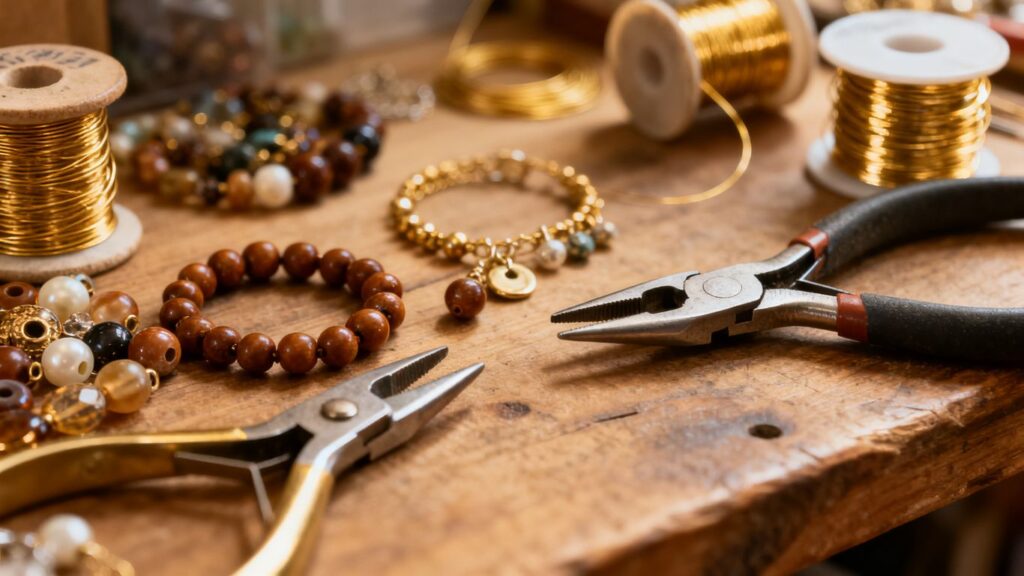
  • DIY Bling: Easy Handmade Jewelry Ideas

    DIY Bling: Easy Handmade Jewelry Ideas

    Key Takeaways

    Designing custom accessories allows for personal expression while providing a rewarding creative outlet. Mastering a few core techniques can transform simple materials into high-quality, wearable art.

    • Start with essential supplies like pliers, wire, and beads to establish a strong crafting foundation.
    • Simple projects such as beaded bracelets or wire-wrapped pendants are perfect for honing fundamental jewelry skills.
    • Investing in quality findings ensures your custom pieces maintain durability and professional appearances.
    • Scaling your work involves exploring new aesthetic styles and consistently trying unconventional combinations.
    • Successful jewelry sales rely on balancing unique design vision with practical market-focused presentation strategies.

    Why Make Your Own Jewelry?

    Embarking on the journey of creating your own adornments offers a unique blend of relaxation and personal satisfaction. When you start crafting unique accessories, you gain the freedom to select materials that resonate with your individual aesthetic, rather than settling for mass-produced items found in crowded retailers. It turns the act of accessorizing into a deeply personal statement, ensuring every piece you wear reflects a genuine piece of you.

    Beyond the final look, the process itself is inherently meditative. Whether you are stringing delicate beads or twisting wire, the focus required keeps your mind sharp and grounded. Many find that diving into DIY jewelry projects serves as an effective therapeutic break from the screen-heavy demands of modern life, allowing for a tactile, tangible accomplishment that lasts much longer than digital engagement.

    Finally, homemade fashion jewelry gives you the ability to master your wardrobe budget without compromising on style. Instead of paying premium prices for designer goods, you can source high-quality components and build a collection that grows with time. As you learn more, you might find BuyJewelleryOnline.net to be a useful resource for comparing trends, refining your taste, and understanding the history behind different jewelry styles as you evolve your craft.

    Essential Tools and Materials for DIY Jewelry

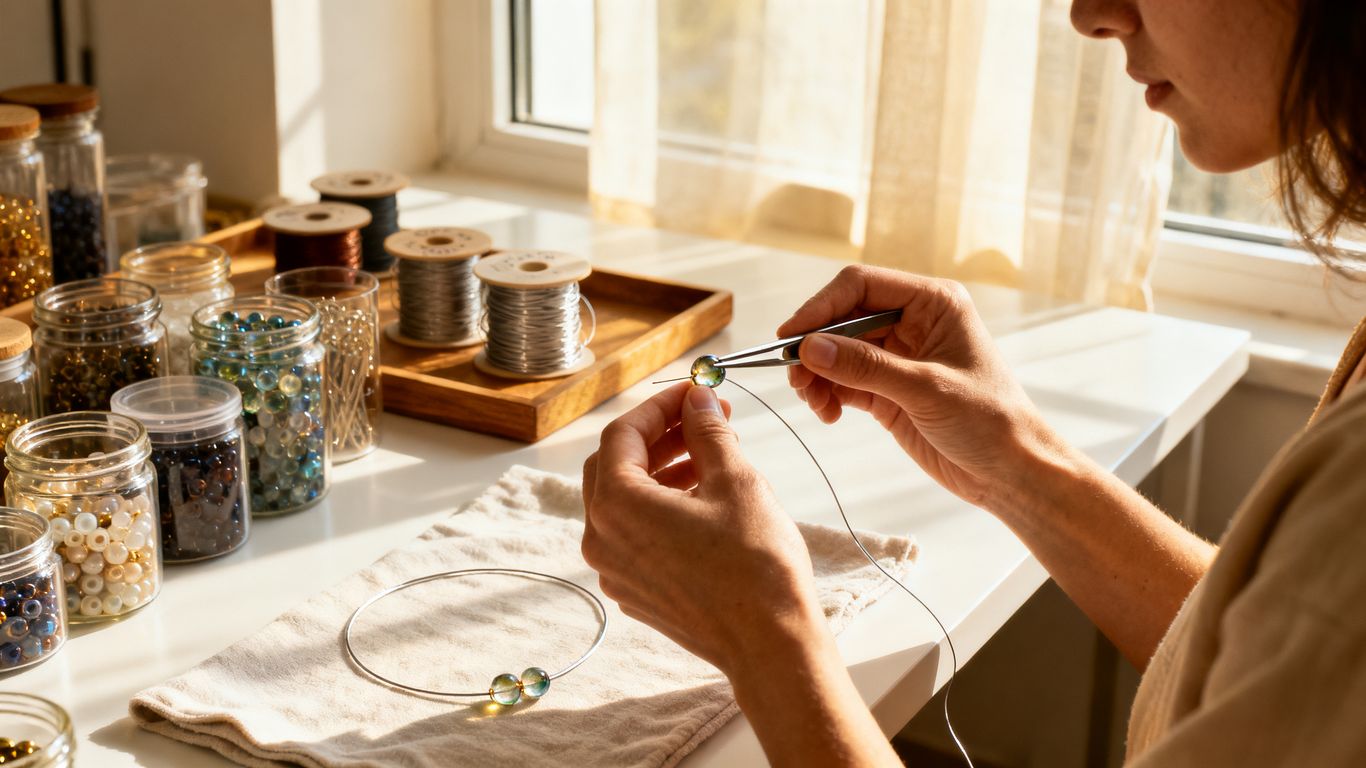
    Basic supplies for crafting jewelry
    #image_title

    Beads: The Building Blocks of Bling

    Beads serve as the foundation for endless designs, ranging from simple spacers to complex woven patterns. Selecting the right materials, such as glass, gemstone, or wood, dramatically impacts the weight and final drape of your creations. When organizing your workspace, keep these components separated by shape and material type to maintain efficiency.

    Item CategoryRecommended UsageCrafting Benefit
    Crystal BeadsElegant evening wearHigh light reflection
    Seed BeadsIntricate weavingDetailed texture creation
    Spacer BeadsBalancing heavy elementsAdds structural contrast

    Selecting high-quality beads from the large selection found at GoodyBeads helps ensure your final product looks polished and lasts longer through daily wear.

    Wire Wrapping Wonders

    Wire is the skeleton of your piece, providing strength and structure for whatever adornment you choose to build. Learning to manipulate different gauges of wire is a critical skill in beginner jewelry making that pays off exponentially as you progress. You can start by practicing loops and simple coils before moving toward more elaborate cages for stones or charms.

    Finding the Perfect Findings

    Findings are the essential hardware that connects your design elements into a secure, functional piece of jewelry. Common pieces include jump rings, earring wires, and clasps, which must be chosen for both aesthetic compatibility and durability. Never underestimate the importance of reliable connectors, as these are the components that actually hold your hard work together on your wrist or neck.

    Easy Handmade Jewelry Ideas for Beginners

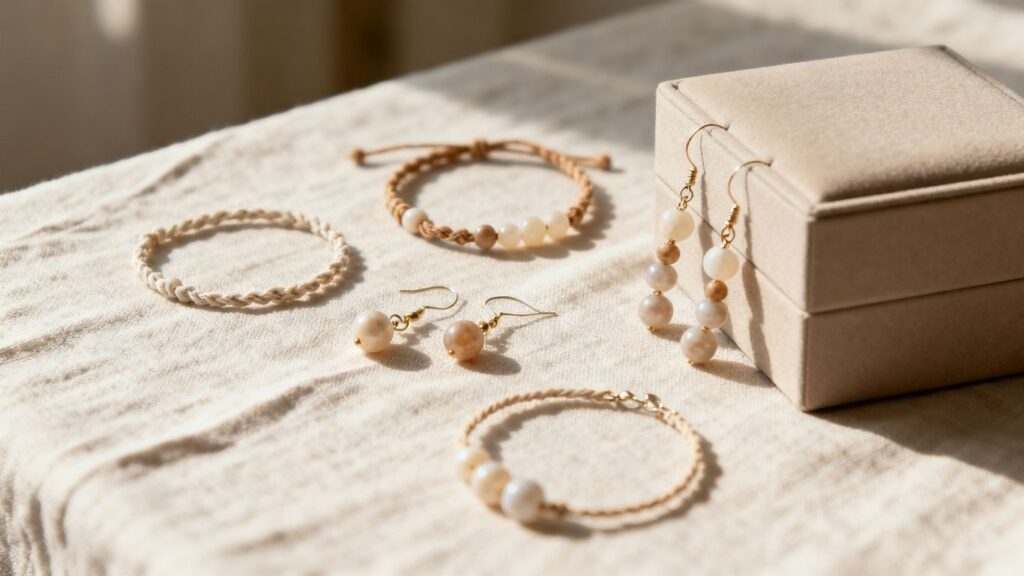
    Various pieces of handmade jewelry
    #image_title

    Simple Beaded Bracelets

    Creating beaded bracelets is the perfect entry point for any newcomer wanting to explore the craft. By selecting elastic cord or sturdy nylon thread, you can produce pieces that easily slide on and off without complex clasps. When you are ready to expand your repertoire, try incorporating these elements:

    • Incorporate small metallic beads for a touch of sophistication.
    • Use mixed-size stones to add visual weight and interest.
    • Experiment with color palettes based on seasonal trends or outfits.
    • Secure the ends with jeweler’s cement for a clean, professional finish.

    These projects are quick, rewarding, and ideal for gifting or building your personal stash of creative beaded necklaces.

    Dangle Earrings with Charms

    Earrings are perhaps the most versatile project, offering quick results that show off your personal style immediately. Start with basic headpins and assorted charms, threading them onto ear wires to build your perfect drop silhouette. This practice helps you understand weight distribution, an important factor in keeping wearable art comfortable for day-to-day use.

    Wire-Wrapped Pendants

    Wire-wrapped pendants allow you to turn raw, uncut stones or interesting found objects into stunning focal points for a necklace. By securing your chosen piece firmly with coiled wire, you create a rustic, bespoke look that is impossible to replicate with machinery. For those seeking inspiration, BuyJewelleryOnline.net provides helpful context on evolving your design skills while keeping your jewelry storage and care needs in mind.

    Taking Your DIY Jewelry to the Next Level

    Exploring Different Jewelry Styles

    Once you feel comfortable with the basics, it is time to branch out by exploring complex techniques like bead-weaving or metal etching to enhance your repertoire. Transitioning from simple stringing to structural designs requires a strong eye for balance and attention to detail, which you develop through consistent practice. You might find that looking at historical styles or modern artisanal markets reveals new combinations you had not previously considered.

    Tips for Selling Your Handmade Jewelry

    Turning your hobby into a potential side hustle requires a shift from strictly personal preferences to marketability. You should focus on identifying what makes your specific style stand out, whether that is the use of unique recycled materials, expert color coordination, or a specific aesthetic like artisan-crafted rustic charms. Consistency in your technique ensures that your inventory looks cohesive, which helps potential buyers trust in the quality of your work.

    When presenting your items online, professional photography is non-negotiable. Natural lighting and clean, uncluttered backgrounds allow the details of your handiwork to shine, helping customers see exactly what they are purchasing. You can find excellent jewelry advertisement ideas to help your brand reach the right audience, making your journey from a hobbyist to a serious creator much smoother and more effective.

    Lastly, ensure your customer service matches the quality of your product. Whether you are shipping packages globally or selling locally, clear communication and beautiful packaging can turn a first-time purchaser into a lifelong fan. If you ever feel stuck on how to position your custom handmade jewelry ideas for a wider audience, take the time to refine your business plan once you feel ready to sell.

    Conclusion

    Developing your skills in jewelry crafting is a journey that starts with simple materials and grows into a sophisticated method of artistic expression and wearability. By mastering essential tools, iterating on your favorite designs, and staying curious about new techniques, you build a collection that is as unique as your personality. Take your time, enjoy the process, and share your handmade creations with the world.

    Frequently Asked Questions

    What are the best materials for a beginner to buy first?

    Beginners should start with basic tools including round-nose, chain-nose and flush-cutter pliers, along with assorted gauges of copper wire, jump rings, and high-quality nylon cord.

    How do I keep my jewelry from tarnishing?

    To keep your pieces vibrant, store them in airtight containers away from humidity, avoid exposure to harsh chemicals like perfumes, and wipe them clean with a soft microfiber cloth after each wear.

    Can I make professional-looking jewelry without expensive machinery?

    Yes, absolutely, as many exquisite designs are achieved through hand-labor, precise wire wrapping, and assembly techniques that rely on manual dexterity rather than industrial equipment.

    What is the most important skill to learn for jewelry making?

    Understanding how to securely open and close jump rings is considered the most vital fundamental skill, as it is required for nearly every type of bracelet, earring, or necklace construction.

    How do I find my own unique design style?

    Spend time sketching, experimenting with color combinations, and studying the work of other artists to see what materials and shapes you find yourself naturally drawn to and most excited to create.

    Is jewelry making an expensive hobby to start?

    It can be very budget-friendly if you purchase essential starter sets, focus on affordable components like glass beads or base metals, and build your specialized collection slowly over time.

    Where can I find patterns for my next jewelry project?

    Many crafters find inspiration by looking at online tutorial platforms, joining jewelry-making social media groups, or exploring books dedicated to specific techniques like wire smithing or bead embroidery.

  • Wooden Jewellery Box: A Timeless Treasure

    Wooden Jewellery Box: A Timeless Treasure

    Key Takeaways

    A wooden jewellery box brings practical organization together with the warmth and character of natural material. The right choice depends on your collection, room, habits, and the level of craftsmanship you value.

    • Solid wood offers strength and a lasting, substantial feel.
    • Veneer can provide attractive grain at a lighter weight and often lower cost.
    • Compartments, hooks, trays, and drawers help prevent tangles and misplaced pieces.
    • Gentle cleaning and stable indoor conditions help preserve the box.
    • A well-chosen box makes a thoughtful gift for birthdays, weddings, anniversaries, and other milestones.

    Why Choose a Wooden Jewellery Box?

    A wooden jewellery box is more than a container placed on a dresser. It gives necklaces, rings, bracelets, and earrings a dedicated home while adding texture to the room around it. Wood also ages in a way that can make a familiar object feel more personal over time. At BuyJewelleryOnline.net, readers can find reviews and buying advice for jewelry and storage solutions, which can be useful when comparing form, function, and price.

    Durability and Longevity

    Good construction is one of the clearest reasons to choose wood. A well-made box can withstand ordinary daily handling, and solid panels, sound hinges, and a secure closure help it remain useful for years. The interior matters too: soft lining and sensible dividers keep pieces from knocking against one another. Rather than choosing a box only for its appearance, check whether the joinery feels even and whether the lid opens without strain.

    A durable box does not need to look heavy or old-fashioned. It may be a compact handmade wooden trinket holder for a few everyday pieces, or a larger chest with several levels for a growing collection. In either case, careful construction matters more than excessive decoration.

    Natural Beauty and Aesthetic Appeal

    Every piece of wood has its own grain, tone, and small variations, so two boxes made in a similar style may still feel distinct. Walnut can look deep and understated, while lighter woods bring a softer presence to a dressing table. A clear finish lets the grain remain central; a painted or lacquered surface creates a more coordinated look.

    The style can also echo the jewelry inside. An antique jewellery storage box may suit heirloom pieces and traditional interiors, while a clean rectangular case works well in a modern bedroom. If you enjoy visible craftsmanship, a carved wood jewelry chest can make the box itself part of the room’s character.

    Eco-Friendly Choice

    Wood can be a thoughtful material choice when it comes from responsible sources and the box is made to last. Longevity matters because a durable item is less likely to be replaced quickly. Choosing a repairable box, avoiding unnecessary oversized packaging, and caring for the finish all extend its useful life.

    The most practical approach is to look beyond a simple claim that a product is “natural.” Consider the construction, finish, expected lifespan, and whether its size genuinely suits your collection. A smaller box that is used for years may be a better choice than a larger one that quickly becomes inconvenient.

    Types of Wooden Jewellery Boxes

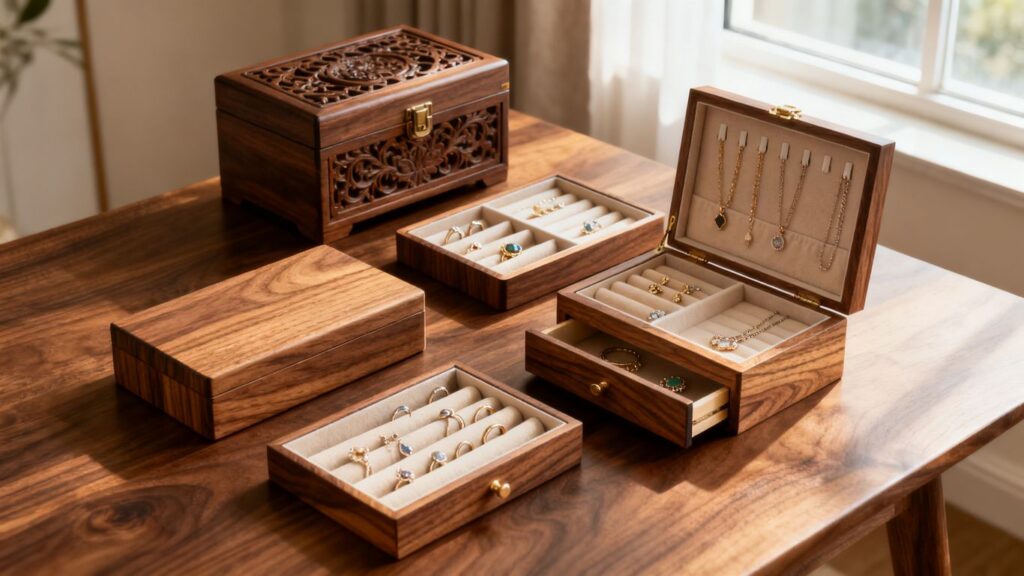
    Wooden boxes vary widely in construction and layout, from small hinged cases to tall organizers with drawers and mirrors. The best format is usually the one that matches how you actually wear and store your pieces. Before choosing a finish, think about whether you need necklace hooks, ring rolls, open trays, or space for watches and bangles.

    Wooden jewellery boxes in varied styles
    Wooden jewellery boxes in varied styles

    Solid Wood vs. Veneer

    Solid wood is cut from the material itself and often gives a box a weighty, substantial feel. Its grain may continue around the piece, although natural movement in wood means careful construction is still important. Veneer uses a thin layer of attractive wood over another material, which can create a refined surface while keeping the box lighter.

    Neither option is automatically right for every buyer. Solid wood may appeal to someone looking for a keepsake with heirloom character, while veneer can suit a large organizer that needs to remain manageable on a shelf. Compare the overall construction, interior fittings, and finish rather than judging only by the label.

    Carved and Inlaid Designs

    Carving and inlay add detail to the lid, sides, or borders of a box. Floral motifs, geometric patterns, contrasting wood, and small decorative panels can give a simple case a strong sense of place. These details are especially appealing when the box is intended to remain visible rather than tucked away in a drawer.

    Decorative work should still leave the box comfortable to use. Look for a lid that opens fully, edges that do not catch fabric, and an interior that protects delicate surfaces. The handcrafted cherry wood box guide offers a useful source of inspiration for readers interested in the relationship between wood selection, proportions, drawers, trays, and finishing.

    Modern and Minimalist Styles

    Modern designs often rely on straight lines, restrained hardware, and a limited palette of materials. They may have one broad compartment, a removable tray, or carefully arranged sections that make daily access quick. A simple shape can be especially useful when the box will sit beside other furniture or in a small apartment.

    When comparing contemporary options, focus on the way the storage is divided. This quick guide can help match a box to a collection:

    Jewellery collectionUseful interior featureSuitable box style
    Rings and small earringsRing rolls and shallow sectionsCompact hinged case
    Necklaces and chainsHooks or individually spaced slotsTall organizer or cabinet style
    Bracelets and watchesWider trays with flexible spaceMulti-layer chest
    Mixed everyday piecesRemovable tray and small drawersMedium dresser box

    The table is only a starting point. A person who wears necklaces daily may value visibility more than capacity, while someone storing inherited pieces may prefer a closed box with a secure latch. For broader comparison, solid wood jewellery boxes can help readers see how drawers, trays, hooks, and cabinet-style layouts serve different collections.

    Caring for Your Wooden Jewellery Box

    Wood responds to the conditions around it, so care is mostly a matter of gentle habits. Keep the box clean, avoid harsh household products, and do not treat every finish as if it were the same. The interior deserves attention as well, since dust and grit can transfer to jewelry and soft linings.

    Cleaning and Polishing Tips

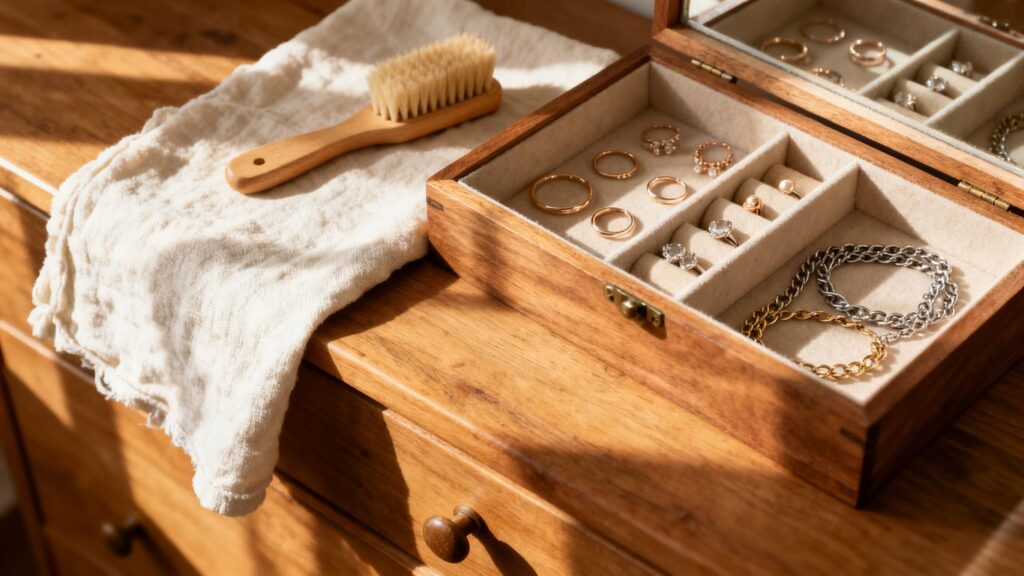
    Begin with a soft, dry cloth to remove loose dust. If the surface needs more attention, use a barely damp cloth and dry it promptly, working with the grain where possible. Avoid soaking the wood, spraying cleaner directly onto it, or using abrasive pads that may dull the finish.

    Polish should be used sparingly and only when it suits the existing finish. A product intended for unfinished wood may not be appropriate for lacquer, paint, or veneer. For the lining and compartments, empty the box first, lift out removable trays if possible, and use a gentle brush or cloth rather than rubbing aggressively.

    Protecting from Moisture and Heat

    Place the box away from radiators, sunny windows, steamy bathrooms, and areas prone to spills. Excess heat can dry or distort wood, while moisture may affect panels, finishes, hinges, and interior fabrics. Stable indoor conditions are usually kinder than repeated movement between very warm and very damp spaces.

    A simple routine keeps protection manageable. At BuyJewelleryOnline.net, storage solutions are covered as part of the platform’s jewelry reviews and buying advice, while these everyday habits apply to almost any wooden box:

    • Keep the lid closed when the box is not being used.
    • Store pieces dry before returning them to their compartments.
    • Leave a little room around chains and larger ornaments.
    • Check hinges and closures gently instead of forcing them.

    These steps reduce dust, tangling, and unnecessary pressure on the box. If a spill occurs, blot it quickly and allow the box to dry naturally rather than placing it beside direct heat.

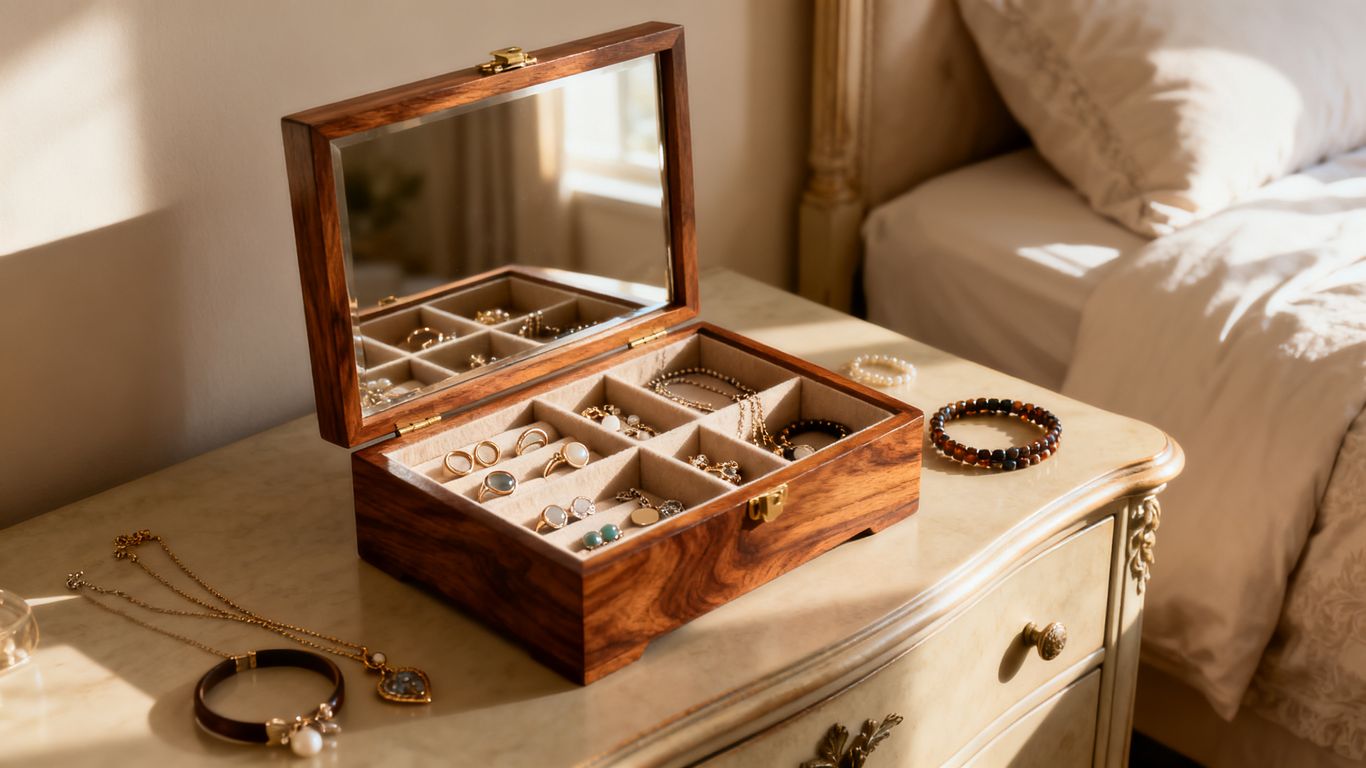
    Open wooden jewellery box with organized pieces
    Open wooden jewellery box with organized pieces

    A short video can also make it easier to compare layouts and care techniques visually.

    The Perfect Gift: A Wooden Jewellery Box

    A wooden jewellery box makes a meaningful gift because it combines usefulness with a sense of occasion. It can hold a new pair of earrings, a family ring, or the small pieces someone wears every day. The gift does not need to be extravagant; a carefully chosen size and finish often feel more personal than a box selected only for its price.

    For a birthday or anniversary, consider the recipient’s existing collection and home style. Someone with many necklaces may appreciate hooks and vertical storage, while a minimalist may prefer a low-profile case with a removable tray. A compact wooden keepsake box can suit a first jewelry collection, whereas a larger chest may be better for someone who already owns several treasured pieces.

    The presentation can add another layer of warmth. Place a handwritten note inside, or include a small piece of jewelry that has a story behind it. Readers looking for more inspiration can browse gift jewellery boxes, then compare the suggested design with the recipient’s habits, available space, and preferred aesthetic before making a decision.

    Conclusion

    A wooden jewellery box is a practical way to protect and arrange jewelry while bringing natural warmth to a room. Whether you choose solid wood, veneer, carved detailing, or a minimalist design, the most satisfying option will be one that fits your collection and remains pleasant to use. With gentle cleaning and sensible placement, it can become a lasting part of everyday routines and family memories.

    Frequently Asked Questions

    Is a wooden jewellery box suitable for everyday use?

    Yes. Choose a layout that matches the pieces you wear most often, and return jewelry to its compartment after use to reduce tangles and surface wear.

    What is the difference between solid wood and veneer?

    Solid wood is made from thicker pieces of wood, while veneer is a thin wood layer applied over another material. Both can look attractive when well finished and constructed.

    How should I clean a wooden jewellery box?

    Dust it with a soft, dry cloth and use only a barely damp cloth when needed. Dry the surface promptly and avoid abrasive cleaners or soaking.

    Where should I keep a wooden jewellery box?

    Keep it in a dry indoor location away from direct sunlight, radiators, bathroom steam, and places where water or cosmetics may spill.

    What features help prevent necklace tangles?

    Necklace hooks, individually spaced sections, and vertical storage can keep chains separated. A box with enough height may be more useful than a wide, shallow case.

    Can a wooden jewellery box be a good wedding gift?

    It can be a thoughtful wedding, anniversary, or engagement gift, especially when the style suits the recipient and the interior provides room for meaningful pieces.

    How do I choose the right size?

    Count the jewelry you own now, then allow modest room for future additions. A box that is too small becomes crowded, while one that is too large may waste space and feel cumbersome.