Key Takeaways
925 sterling silver is a practical choice for jewellery that balances shine, durability, and everyday wear. The right purchase still depends on purity, design, seller transparency, and aftercare.
- Look for clear 925 purity information and reliable hallmarking details.
- Compare craftsmanship, finish, sizing, return policies, and customer feedback.
- Choose designs that suit your wardrobe rather than following every trend.
- Check the total price, stone details, shipping terms, and care instructions.
- Store silver jewellery carefully and clean it gently to slow tarnishing.
- Why Choose 925 Sterling Silver Jewellery?
- Factors to Consider When Buying 925 Silver Jewellery
- The Top 925 Silver Jewellery Brands in India
- Paksha: Known for Hallmarked 925 Silver Jewellery with Customization
- Shaya by CaratLane: Specializing in Contemporary 925 Silver Jewellery for Everyday Style
- Shyle: Popular for Handcrafted 92.5 Silver Jewellery and Silver Rakhis
- GIVA: A Go-To for Shoppers Who Want a Broad Choice of Everyday 925 Silver Jewellery
- Caring for Your 925 Sterling Silver Jewellery
- Conclusion
- Frequently Asked Questions
- Is 925 silver the same as pure silver?
- Does 925 sterling silver tarnish?
- How can I check whether silver jewellery is 925?
- Is 925 silver jewellery suitable for daily wear?
- What should I check before buying silver jewellery online?
- Why do some silver pieces cost more than others?
- Can tarnished silver jewellery be cleaned at home?
Why Choose 925 Sterling Silver Jewellery?
925 sterling silver contains 92.5% silver, with the remaining portion generally made up of other metals that help improve strength. That combination makes it more suitable for rings, earrings, necklaces, bangles, and other pieces that need to hold their shape. It also has a bright, adaptable finish that works with both traditional Indian clothing and simple everyday outfits.
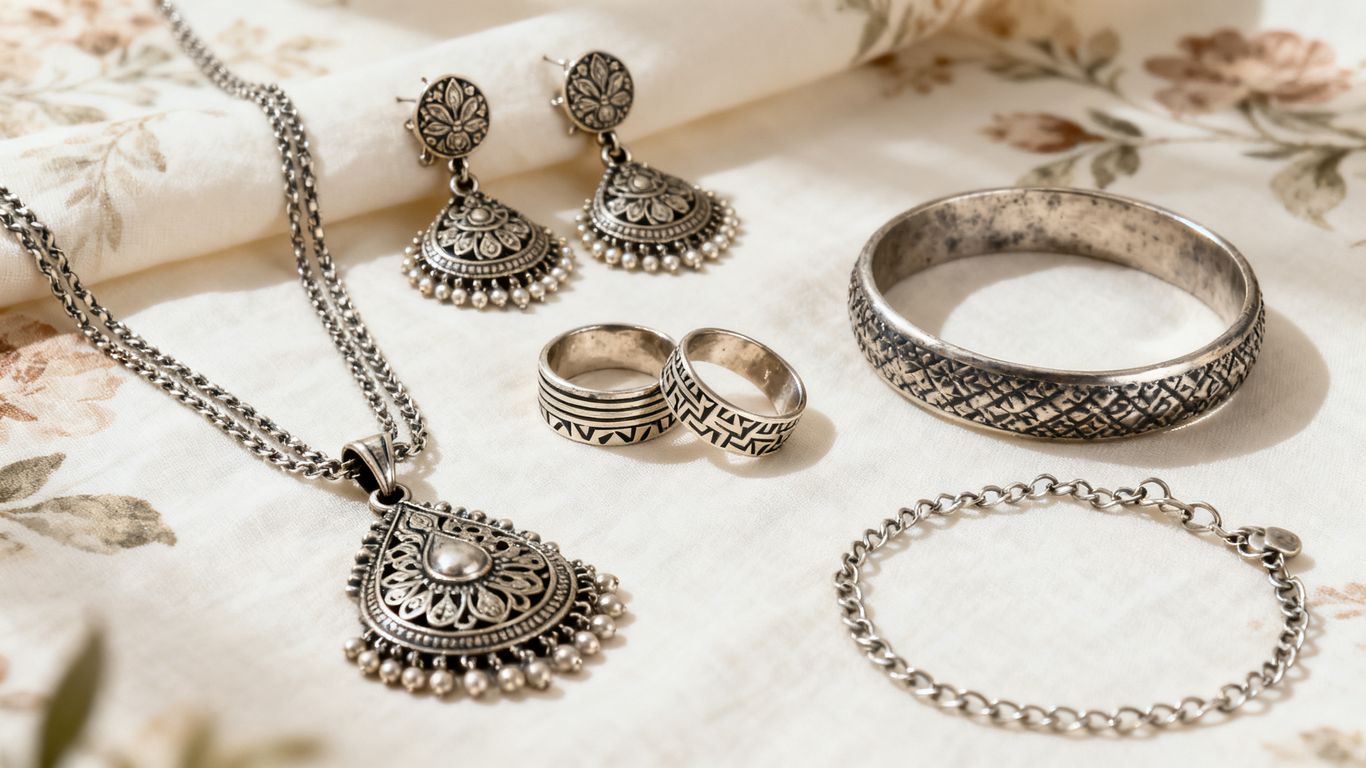
For many shoppers, silver offers a more accessible entry point into fine jewellery than gold or platinum. It can be dressed up for weddings and festivals, yet a slim chain or small pair of earrings can feel completely at home with workwear. The phrase “sterling silver jewellery India” covers a wide range of aesthetics, from polished contemporary pieces to oxidized designs with a more artisanal character.
925 silver is not maintenance-free, but its care is straightforward when handled consistently. Moisture, cosmetics, sweat, and air can gradually darken the surface, which is why storage and gentle cleaning matter. If you are comparing Indian jewellery brands, use the same questions for each one: what is the purity, how is the piece finished, and what happens if the fit is not right?
Factors to Consider When Buying 925 Silver Jewellery
Buying silver online is easier when the decision is broken into a few practical checks. Product photographs can be useful, but they do not replace details about metal purity, dimensions, finish, stones, and returns. Whether you are searching for hallmarked silver jewellery brands or affordable 925 silver online India, read beyond the headline price.
Purity and Hallmarking
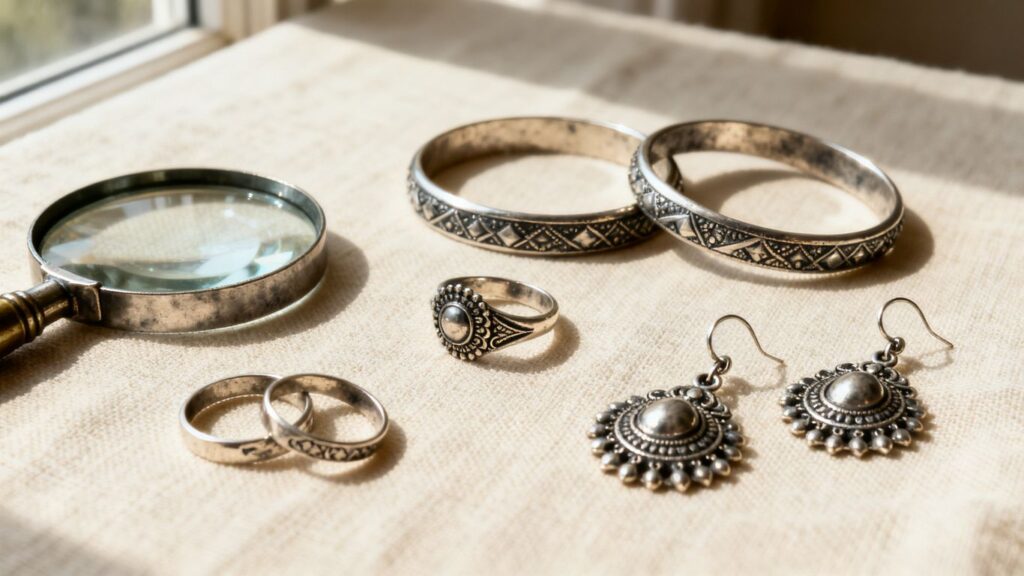
Purity information should be easy to find on the product page or accompanying documentation. A 925 mark indicates sterling silver, but shoppers should also look for clarity about hallmarking, plating, embellishments, and whether the stated weight refers to the complete piece. Clear product information matters because it lets you compare like with like instead of judging value from photographs alone.
A simple comparison can help separate the terms used by different sellers:
| Detail | What to check | Why it matters |
|---|---|---|
| 925 mark | Whether sterling silver is clearly stated | Confirms the advertised silver standard |
| Hallmarking | Whether hallmark information is provided | Adds useful confidence about the metal claim |
| Finish | Polished, oxidized, plated, or mixed | Affects appearance and future care |
| Stone details | Type, setting, and treatment | Helps explain the final price |
After checking these points, look at the product description again and make sure the details match the photographs. A careful listing should leave fewer unanswered questions about what will arrive at your door.
Craftsmanship and Design
Craftsmanship shows up in the less glamorous details: smooth edges, even joins, secure clasps, balanced earrings, and a finish that looks consistent from different angles. For rings and bangles, measurements are especially important because an attractive design is of little use if it pinches or slides off. Close-up images and a clear size guide are helpful signs of a considered online listing.
Style is personal, but versatility can be a sensible starting point. Minimal pieces may work across several outfits, while jhumkas, textured cuffs, and layered necklaces can bring more character to festive dressing. Shoppers exploring 925 sterling silver bangles can compare the width, opening, texture, and fit before choosing a design.
Brand Reputation and Customer Reviews
Reviews are most useful when they describe specific, observable details rather than simply calling a piece beautiful. Look for comments about sizing, weight, colour, packaging, delivery, tarnishing over time, and how the seller handled an exchange. A consistent pattern across several reviews is more informative than one enthusiastic or disappointed reaction.
It is also worth checking whether the seller publishes contact information, delivery timelines, return conditions, and care guidance. Paksha is one example of a source page that describes pure 925 Indian silver jewellery, hallmarked silver, customization, shipping conditions, and a 7-day return or exchange policy. Those are the kinds of concrete details shoppers should seek when comparing sellers, without assuming that one policy applies across the market.
Price and Value for Money
The lowest price is not automatically the best value. Silver weight, workmanship, stones, finishing, packaging, taxes, delivery charges, and after-sales terms can all affect the final cost. A lightweight daily-wear piece may be perfectly worthwhile, while a heavier or more detailed design should come with enough information to justify its price.
Before placing an order, make a short comparison using these checks:
- Compare the silver purity statement and listed weight.
- Check whether stones, plating, or personalization change the price.
- Read shipping, return, exchange, and warranty conditions.
- Review the size guide and measure an existing comfortable piece.
This process makes online shopping less impulsive and gives you a clearer idea of what you are paying for. It is particularly useful when a search for “top silver jewellery designers India” produces a mix of handmade, fashion, and fine-jewellery listings.
The Top 925 Silver Jewellery Brands in India
There is no single best style for every buyer, so a useful shortlist should cover different preferences rather than rank pieces by appearance alone. Some shoppers want delicate jewellery for frequent wear, while others prefer traditional motifs or customized gifts. The labels below are best read as style and shopping directions, with product details checked at the time of purchase.
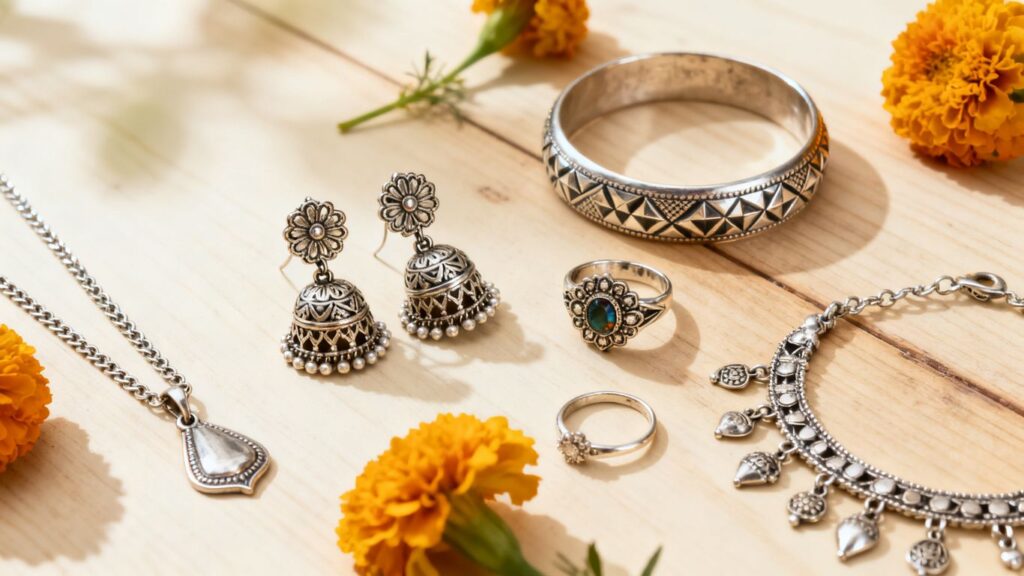
Paksha: Known for Hallmarked 925 Silver Jewellery with Customization
Paksha focuses on handcrafted 925 silver jewellery influenced by Indian design traditions. Its official website currently highlights hallmarked 925 silver and customization across its pieces, which gives it a clearer position for shoppers who want traditional styling with personalization options.
Paksha may suit buyers looking for jewellery that feels more personal than standard ready-made designs. Before ordering, check the individual product for dimensions, weight, customization conditions, delivery time, and return eligibility.
Shaya by CaratLane: Specializing in Contemporary 925 Silver Jewellery for Everyday Style
Shaya by CaratLane focuses on handcrafted 925 silver jewellery across earrings, necklaces, bracelets, rings, anklets, and other styles. Its current collection includes plain silver, oxidized silver, and gold-plated 925 silver designs, giving shoppers several finishes within the same brand.
It is particularly relevant if you want contemporary silver jewellery for everyday wear rather than heavily traditional pieces. Check the exact product description because plating, finish, dimensions, and pricing vary considerably between designs.
Shyle: Popular for Handcrafted 92.5 Silver Jewellery and Silver Rakhis
Shyle’s current range includes handcrafted 92.5 sterling silver earrings, necklaces, bangles, kadas, anklets, and other jewellery produced in Jaipur. Its Rakhi collection is a stronger differentiator because it includes 92.5 silver keepsake designs as well as personalized Rakhi options.
This makes Shyle worth considering when shopping for traditional silver jewellery or a Raksha Bandhan gift with a longer usable life than a conventional Rakhi. Its personalized collection currently includes message-based designs such as “Best Brother Ever” and “Best Sister Ever.”
GIVA: A Go-To for Shoppers Who Want a Broad Choice of Everyday 925 Silver Jewellery
GIVA has a large 925 sterling silver range covering rings, earrings, necklaces, bracelets, anklets, men’s jewellery, children’s jewellery, personalized pieces, and other categories. Its website also lets shoppers browse several jewellery categories by price, metal, finish, and intended style, including everyday, office, party, and some wedding options.
That breadth makes GIVA particularly useful for shoppers who want to compare several types of 925 silver jewellery without moving between multiple specialist sellers. Buyers should still check whether a specific piece is plain silver, gold-plated, rose-gold finished, oxidized, or set with stones before comparing prices.
Caring for Your 925 Sterling Silver Jewellery
Sterling silver naturally reacts with substances in its surroundings, so occasional darkening is normal rather than a sign that the piece has lost all value. Keep jewellery away from perfume, hairspray, lotions, swimming pools, and prolonged moisture where possible. After wearing it, a soft, dry cloth can remove surface oils before the piece goes back into storage.
Store each item separately in a dry pouch or lined compartment to reduce scratches and tangling. Avoid leaving silver loose in a humid bathroom, and be cautious with airtight packaging if moisture is trapped inside. For more practical guidance on silver cleaning methods, use gentle household approaches and check whether a delicate stone or special finish needs professional attention.
When cleaning, start with the mildest method and stop if the surface, stone, or coating seems vulnerable. Do not scrub aggressively, use abrasive powders, or soak a piece without knowing how its components will react. With steady, gentle care, 925 silver can remain a reliable part of an everyday jewellery collection for years.
Conclusion
The best 925 silver jewellery brands in India are not defined by one universal style; they are the sellers and collections that give you enough information to choose with confidence. Check purity, craftsmanship, reviews, price, fit, and care requirements, then select the piece that feels right for your wardrobe or occasion.
Frequently Asked Questions
Is 925 silver the same as pure silver?
No. 925 silver is sterling silver, containing 92.5% silver, while pure silver has a higher silver content and is generally softer. Sterling silver is commonly used for jewellery because it is better suited to regular wear.
Does 925 sterling silver tarnish?
Yes, it can darken when exposed to air, moisture, sweat, cosmetics, or household chemicals. Regular gentle cleaning and dry, separate storage can help slow the process.
How can I check whether silver jewellery is 925?
Look for a 925 mark and clear product or hallmark information from the seller. For higher-value purchases, ask for supporting documentation and make sure the description explains the metal accurately.
Is 925 silver jewellery suitable for daily wear?
Many 925 silver pieces can be worn daily, provided they are protected from water, chemicals, and rough handling. Delicate chains, stones, and special finishes may need more careful use.
What should I check before buying silver jewellery online?
Review purity, weight, dimensions, stone details, photographs, customer feedback, delivery terms, and return or exchange conditions. A size guide is particularly useful for rings, bangles, and fitted pieces.
Why do some silver pieces cost more than others?
Price can reflect silver weight, workmanship, design complexity, stones, finish, personalization, packaging, and service terms. Comparing these details gives a more useful value assessment than comparing prices alone.
Can tarnished silver jewellery be cleaned at home?
Often, light tarnish can be treated with a soft cloth and a gentle cleaning method suitable for silver. Avoid harsh abrasives and seek professional advice for valuable, plated, stone-set, or unusually delicate pieces.