Tag: Appeal

  • Wooden Jewellery Box: A Timeless Treasure

    Wooden Jewellery Box: A Timeless Treasure

    Key Takeaways

    A wooden jewellery box brings practical organization together with the warmth and character of natural material. The right choice depends on your collection, room, habits, and the level of craftsmanship you value.

    • Solid wood offers strength and a lasting, substantial feel.
    • Veneer can provide attractive grain at a lighter weight and often lower cost.
    • Compartments, hooks, trays, and drawers help prevent tangles and misplaced pieces.
    • Gentle cleaning and stable indoor conditions help preserve the box.
    • A well-chosen box makes a thoughtful gift for birthdays, weddings, anniversaries, and other milestones.

    Why Choose a Wooden Jewellery Box?

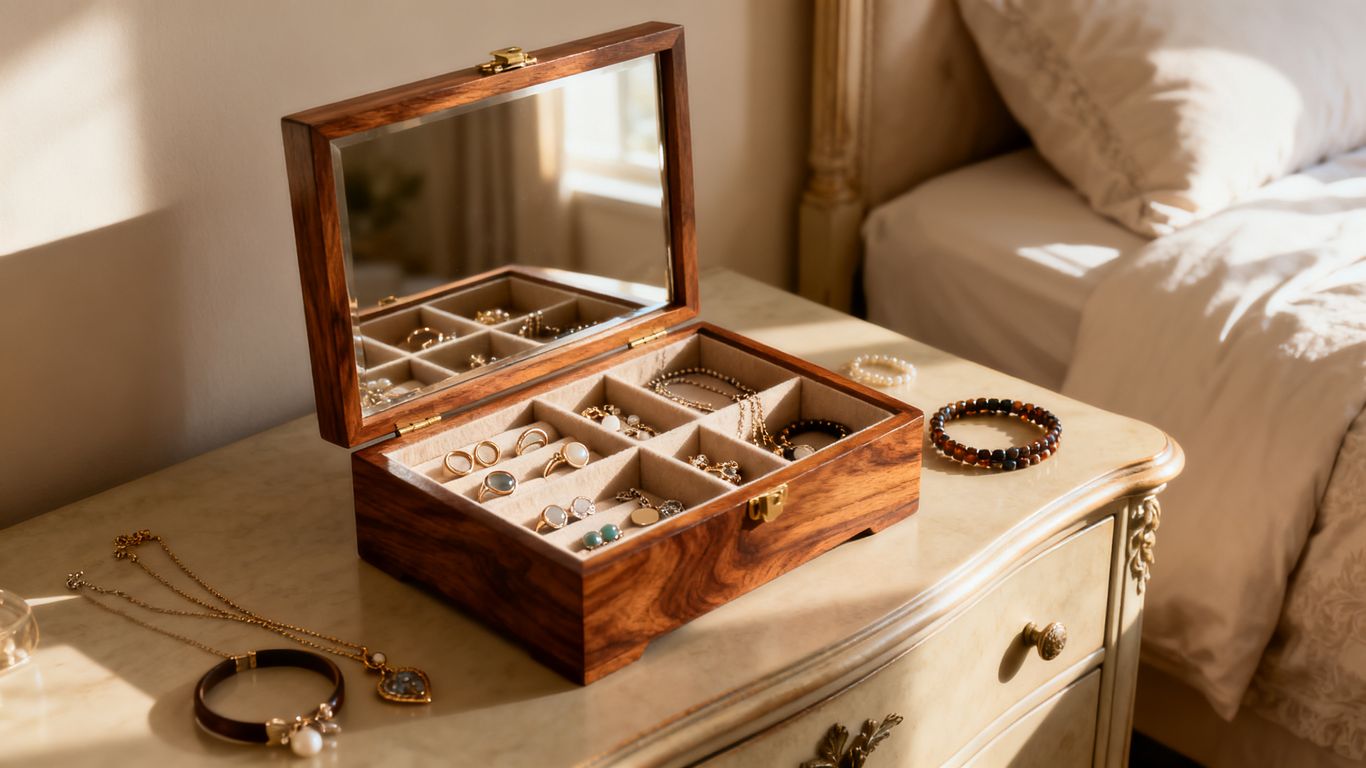
    A wooden jewellery box is more than a container placed on a dresser. It gives necklaces, rings, bracelets, and earrings a dedicated home while adding texture to the room around it. Wood also ages in a way that can make a familiar object feel more personal over time. At BuyJewelleryOnline.net, readers can find reviews and buying advice for jewelry and storage solutions, which can be useful when comparing form, function, and price.

    Durability and Longevity

    Good construction is one of the clearest reasons to choose wood. A well-made box can withstand ordinary daily handling, and solid panels, sound hinges, and a secure closure help it remain useful for years. The interior matters too: soft lining and sensible dividers keep pieces from knocking against one another. Rather than choosing a box only for its appearance, check whether the joinery feels even and whether the lid opens without strain.

    A durable box does not need to look heavy or old-fashioned. It may be a compact handmade wooden trinket holder for a few everyday pieces, or a larger chest with several levels for a growing collection. In either case, careful construction matters more than excessive decoration.

    Natural Beauty and Aesthetic Appeal

    Every piece of wood has its own grain, tone, and small variations, so two boxes made in a similar style may still feel distinct. Walnut can look deep and understated, while lighter woods bring a softer presence to a dressing table. A clear finish lets the grain remain central; a painted or lacquered surface creates a more coordinated look.

    The style can also echo the jewelry inside. An antique jewellery storage box may suit heirloom pieces and traditional interiors, while a clean rectangular case works well in a modern bedroom. If you enjoy visible craftsmanship, a carved wood jewelry chest can make the box itself part of the room’s character.

    Eco-Friendly Choice

    Wood can be a thoughtful material choice when it comes from responsible sources and the box is made to last. Longevity matters because a durable item is less likely to be replaced quickly. Choosing a repairable box, avoiding unnecessary oversized packaging, and caring for the finish all extend its useful life.

    The most practical approach is to look beyond a simple claim that a product is “natural.” Consider the construction, finish, expected lifespan, and whether its size genuinely suits your collection. A smaller box that is used for years may be a better choice than a larger one that quickly becomes inconvenient.

    Types of Wooden Jewellery Boxes

    Wooden boxes vary widely in construction and layout, from small hinged cases to tall organizers with drawers and mirrors. The best format is usually the one that matches how you actually wear and store your pieces. Before choosing a finish, think about whether you need necklace hooks, ring rolls, open trays, or space for watches and bangles.
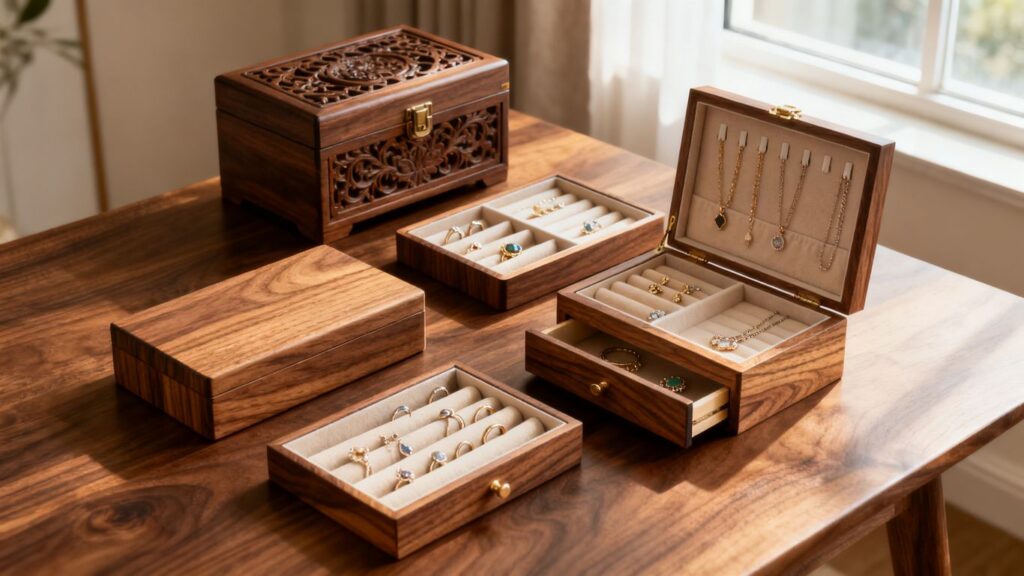
    Wooden jewellery boxes in varied styles
    Wooden jewellery boxes in varied styles

    Solid Wood vs. Veneer

    Solid wood is cut from the material itself and often gives a box a weighty, substantial feel. Its grain may continue around the piece, although natural movement in wood means careful construction is still important. Veneer uses a thin layer of attractive wood over another material, which can create a refined surface while keeping the box lighter.

    Neither option is automatically right for every buyer. Solid wood may appeal to someone looking for a keepsake with heirloom character, while veneer can suit a large organizer that needs to remain manageable on a shelf. Compare the overall construction, interior fittings, and finish rather than judging only by the label.

    Carved and Inlaid Designs

    Carving and inlay add detail to the lid, sides, or borders of a box. Floral motifs, geometric patterns, contrasting wood, and small decorative panels can give a simple case a strong sense of place. These details are especially appealing when the box is intended to remain visible rather than tucked away in a drawer.

    Decorative work should still leave the box comfortable to use. Look for a lid that opens fully, edges that do not catch fabric, and an interior that protects delicate surfaces. The handcrafted cherry wood box guide offers a useful source of inspiration for readers interested in the relationship between wood selection, proportions, drawers, trays, and finishing.

    Modern and Minimalist Styles

    Modern designs often rely on straight lines, restrained hardware, and a limited palette of materials. They may have one broad compartment, a removable tray, or carefully arranged sections that make daily access quick. A simple shape can be especially useful when the box will sit beside other furniture or in a small apartment.

    When comparing contemporary options, focus on the way the storage is divided. This quick guide can help match a box to a collection:

    Jewellery collectionUseful interior featureSuitable box style
    Rings and small earringsRing rolls and shallow sectionsCompact hinged case
    Necklaces and chainsHooks or individually spaced slotsTall organizer or cabinet style
    Bracelets and watchesWider trays with flexible spaceMulti-layer chest
    Mixed everyday piecesRemovable tray and small drawersMedium dresser box

    The table is only a starting point. A person who wears necklaces daily may value visibility more than capacity, while someone storing inherited pieces may prefer a closed box with a secure latch. For broader comparison, solid wood jewellery boxes can help readers see how drawers, trays, hooks, and cabinet-style layouts serve different collections.

    Caring for Your Wooden Jewellery Box

    Wood responds to the conditions around it, so care is mostly a matter of gentle habits. Keep the box clean, avoid harsh household products, and do not treat every finish as if it were the same. The interior deserves attention as well, since dust and grit can transfer to jewelry and soft linings.

    Cleaning and Polishing Tips

    Begin with a soft, dry cloth to remove loose dust. If the surface needs more attention, use a barely damp cloth and dry it promptly, working with the grain where possible. Avoid soaking the wood, spraying cleaner directly onto it, or using abrasive pads that may dull the finish.

    Polish should be used sparingly and only when it suits the existing finish. A product intended for unfinished wood may not be appropriate for lacquer, paint, or veneer. For the lining and compartments, empty the box first, lift out removable trays if possible, and use a gentle brush or cloth rather than rubbing aggressively.

    Protecting from Moisture and Heat

    Place the box away from radiators, sunny windows, steamy bathrooms, and areas prone to spills. Excess heat can dry or distort wood, while moisture may affect panels, finishes, hinges, and interior fabrics. Stable indoor conditions are usually kinder than repeated movement between very warm and very damp spaces.

    A simple routine keeps protection manageable. At BuyJewelleryOnline.net, storage solutions are covered as part of the platform’s jewelry reviews and buying advice, while these everyday habits apply to almost any wooden box:

    • Keep the lid closed when the box is not being used.
    • Store pieces dry before returning them to their compartments.
    • Leave a little room around chains and larger ornaments.
    • Check hinges and closures gently instead of forcing them.

    These steps reduce dust, tangling, and unnecessary pressure on the box. If a spill occurs, blot it quickly and allow the box to dry naturally rather than placing it beside direct heat.
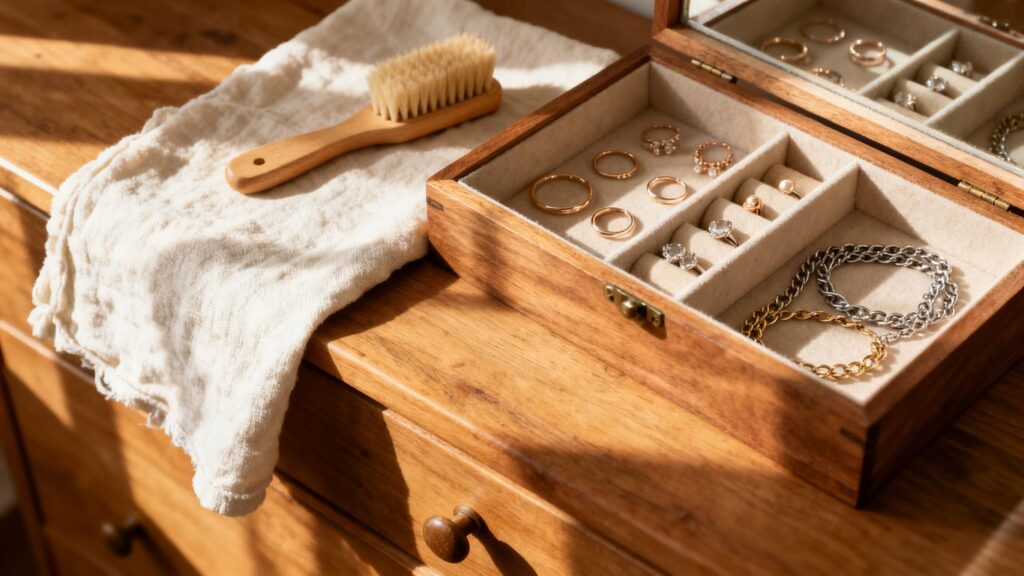
    Open wooden jewellery box with organized pieces
    Open wooden jewellery box with organized pieces

    A short video can also make it easier to compare layouts and care techniques visually.

    The Perfect Gift: A Wooden Jewellery Box

    A wooden jewellery box makes a meaningful gift because it combines usefulness with a sense of occasion. It can hold a new pair of earrings, a family ring, or the small pieces someone wears every day. The gift does not need to be extravagant; a carefully chosen size and finish often feel more personal than a box selected only for its price.

    For a birthday or anniversary, consider the recipient’s existing collection and home style. Someone with many necklaces may appreciate hooks and vertical storage, while a minimalist may prefer a low-profile case with a removable tray. A compact wooden keepsake box can suit a first jewelry collection, whereas a larger chest may be better for someone who already owns several treasured pieces.

    The presentation can add another layer of warmth. Place a handwritten note inside, or include a small piece of jewelry that has a story behind it. Readers looking for more inspiration can browse gift jewellery boxes, then compare the suggested design with the recipient’s habits, available space, and preferred aesthetic before making a decision.

    Conclusion

    A wooden jewellery box is a practical way to protect and arrange jewelry while bringing natural warmth to a room. Whether you choose solid wood, veneer, carved detailing, or a minimalist design, the most satisfying option will be one that fits your collection and remains pleasant to use. With gentle cleaning and sensible placement, it can become a lasting part of everyday routines and family memories.

    Frequently Asked Questions

    Is a wooden jewellery box suitable for everyday use?

    Yes. Choose a layout that matches the pieces you wear most often, and return jewelry to its compartment after use to reduce tangles and surface wear.

    What is the difference between solid wood and veneer?

    Solid wood is made from thicker pieces of wood, while veneer is a thin wood layer applied over another material. Both can look attractive when well finished and constructed.

    How should I clean a wooden jewellery box?

    Dust it with a soft, dry cloth and use only a barely damp cloth when needed. Dry the surface promptly and avoid abrasive cleaners or soaking.

    Where should I keep a wooden jewellery box?

    Keep it in a dry indoor location away from direct sunlight, radiators, bathroom steam, and places where water or cosmetics may spill.

    What features help prevent necklace tangles?

    Necklace hooks, individually spaced sections, and vertical storage can keep chains separated. A box with enough height may be more useful than a wide, shallow case.

    Can a wooden jewellery box be a good wedding gift?

    It can be a thoughtful wedding, anniversary, or engagement gift, especially when the style suits the recipient and the interior provides room for meaningful pieces.

    How do I choose the right size?

    Count the jewelry you own now, then allow modest room for future additions. A box that is too small becomes crowded, while one that is too large may waste space and feel cumbersome.
  • Sparkle & Stories: Famous Jewels You Won’t Believe!

    Sparkle & Stories: Famous Jewels You Won’t Believe!

    Key Takeaways

    These storied adornments connect us to history, offering glimpses into the lives, loves, and legacies of the past. Beyond their monetary worth, famous jewelry items represent the intersection of artistry, cultural significance, and the human desire for permanence.

    • Famous jewelry pieces transcend fashion, often serving as historic artifacts.
    • Many iconic gems are tied to societal power, royalty, and intrigue.
    • Understanding the origin storytelling of these items builds a deeper appreciation for their brilliance.
    • Collectors often prioritize the narrative behind a jewel as much as the quality of the stone.
    • Public fascination with these pieces drives the enduring value of legendary diamond tales and royal jewelry secrets.

    The Allure of Famous Jewelry: More Than Just Sparkle

    When we look at the world’s most renowned gemstones, we are seeing more than just carbon, metal, or light refraction. These objects represent milestones, serving as anchors for memories and symbols of cultural identity that stretch across centuries. While a casual observer might focus on the physical brilliance of a diamond, a true enthusiast recognizes that each piece carries the weight of its own history.

    Evaluating the quality and background of such items requires a grounded perspective on what makes a stone truly unique. To better navigate the nuances of craftsmanship, many enthusiasts consult platforms like BuyJewelleryOnline.net for comprehensive reviews and buying advice. Whether you are interested in modern investment pieces or the historical significance of antique designs, understanding your own preferences is key to building a collection that holds personal meaning.

    To help guide your perspective on jewelry significance, consider these primary factors that collectors analyze:

    • Provenance and ownership history of the piece
    • Craftsmanship techniques specific to the era
    • Rarity and origin of the featured gemstones
    • The emotional narrative connected to the design

    This holistic approach, which you can explore through BuyJewelleryOnline.net, shifts the focus from mere purchase to the lifelong story you carry with you. By viewing jewelry through the lens of history and art, you transform simple items into treasures that possess lasting cultural resonance.

    Iconic Pieces and Their Unforgettable Tales

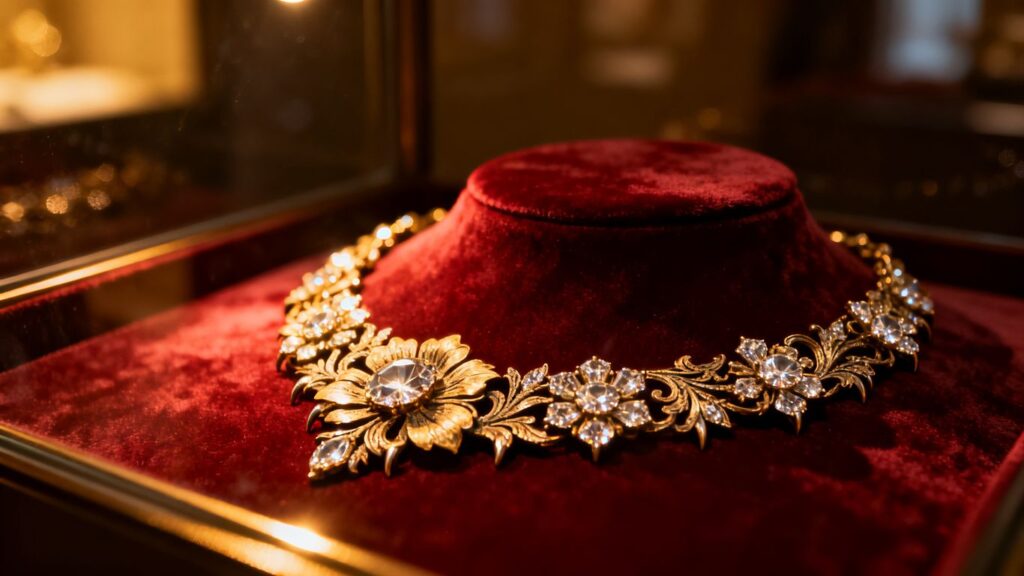
    Famous historical diamond necklace
    #image_title

    History is replete with legends that sparkle under the weight of expectation. From royal vaults to the red carpet, these specific gems have survived wars, thefts, and revolutions, each adding a new chapter to their already complex stories.

    The Hope Diamond: A Curse and a Legacy

    Few gems have captured the global imagination like the famous Hope Diamond. Renowned for its deep blue hue and a history supposedly marked by misfortune, this 45-carat stone has seen many hands, from French monarchs to private collectors like Evalyn Walsh McLean. Its legacy is one of mystery, reminding admirers that sometimes the allure of a jewel lies in the stories told about its origins.

    The Crown Jewels: Symbols of Power and History

    The British Crown Jewels remain perhaps the most recognizable collection of power, representing a lineage that has evolved over centuries. Each item held within the Tower of London serves as a tangible link to medieval society and the absolute authority once wielded by monarchs. These pieces function as much more than finery; they are a direct reflection of royal jewelry secrets and the enduring pageantry of established states.

    The Cartier ‘Tutti Frutti’ Bracelet: A Jazz Age Icon

    Emerging from the bold creativity of the 1920s, the Tutti Frutti style represents a departure from traditional diamond-centric designs. These high-jewelry creations, featuring intricately carved rubies, emeralds, and sapphires, brought a vibrant, exotic aesthetic to the West. The bracelet remains a quintessential example of Art Deco innovation that prioritized color and artistic flow over traditional symmetry.

    The Royal Engagement Rings: Love, Power, and Tradition

    Engagement rings are often the most intimate historical artifacts, frequently passing down through generations of families. Whether it is a sapphire set in diamonds or a rare colored stone, these pieces define celebrity engagement ring stories throughout history. They stand as public declarations of union, illustrating the intersection of private romance and public scrutiny in the lives of high-profile figures.

    The Marilyn Monroe’s ‘Happy Birthday Mr. President’ Necklace

    This piece gained fame not for its karat weight but for its association with a singular, iconic cultural moment. Linked to the glamour of 20th-century celebrity culture, the necklace highlights how jewelry gains intrinsic value when associated with human events. It serves as a reminder that the status of a jewel is often elevated by the person who wears it.

    The Empress Eugénie’s Tiara: A Glimpse into Imperial Glamour

    Imperial tiaras provide a window into the opulence of court life during the 19th century. These pieces were often crafted to emphasize the wearer’s status as a leader and a standard-bearer for fashion. By studying the intricate metalwork of such a tiara, we learn about the artisanal talents that fueled the luxury tastes of imperial houses.

    The Graff Pink Diamond: A Rare and Radiant Gem

    Gemstone TypePrimary FeatureMarket Significance
    Rare Pink DiamondExceptional ColorInvestment Asset
    High-Carat SapphireHistorical ProvenanceCultural Heritage
    Antique JadeiteCultural RarityLuxury Collectible

    The Graff Pink Diamond epitomizes the extreme ends of the gem trade, where rarity dictates the price. As the table above suggests, these stones are not just ornaments but major assets that attract global attention during high-profile auctions. Such diamonds prove that a singular stone can represent a massive store of value while simultaneously serving as a work of art.

    Why These Jewels Captivate Us

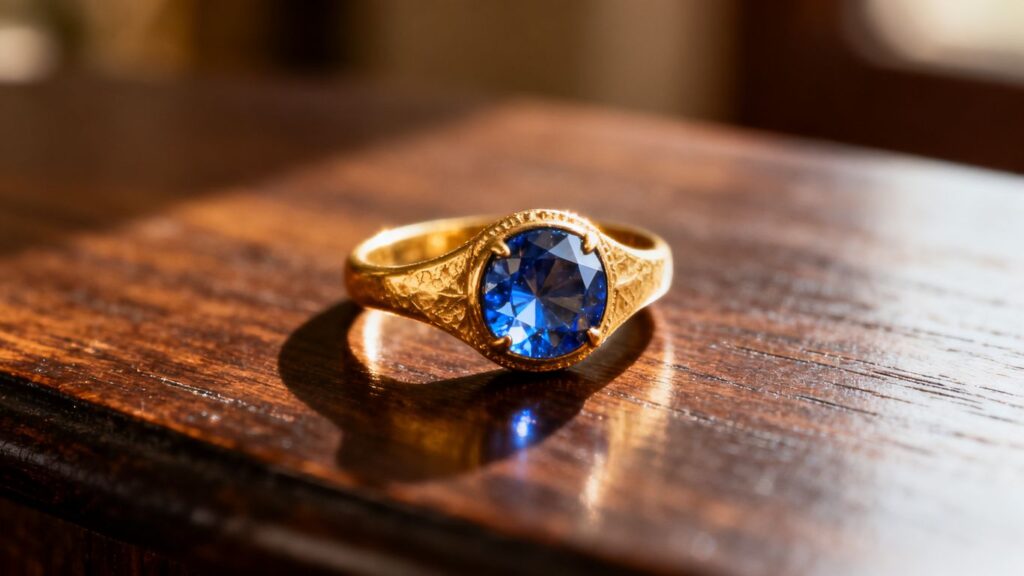
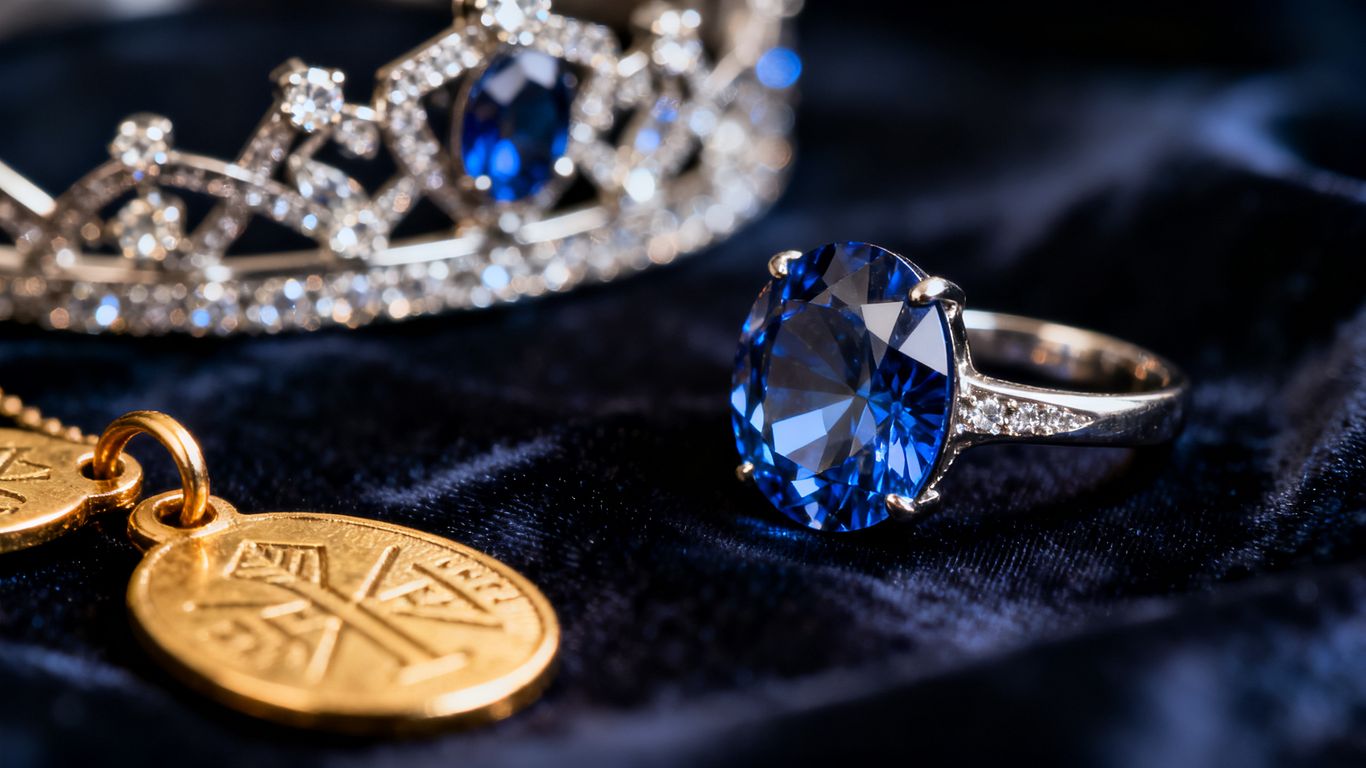
    Vintage gold and sapphire ring
    #image_title

    We are inherently drawn to these objects because they provide a bridge to the past that no textbook can replicate. There is a deep, psychological satisfaction in knowing that an object made centuries ago has been held by previous generations, surviving long after the original craftsmen and owners have passed away. This continuity feels like a tangible connection to history, offering a form of immortality through material endurance.

    Furthermore, the secrecy surrounding some of these pieces creates a natural narrative hook. When we hear about legendary diamond tales, we are engaging with the human side of history. We project our own desires for adventure, romance, and tragedy onto these objects, effectively making them characters in our modern lives rather than just inanimate rocks sitting in glass cases.

    Finally, the technical complexity of iconic gemstone histories continues to push the limits of modern design. Jewelers look back at these masterpieces to understand how to balance weight, light, and stone integrity. By analyzing the structural choices of the past, we ensure that the craft of jewelry making remains a vibrant, evolving art form that respects its roots while looking forward to future trends e5e6.

    Collecting Stories: The Enduring Appeal of Famous Jewelry

    For most people, collecting jewelry is a process of curation that goes beyond the price tag. Taking the time to research a piece, understand its background, and recognize its artistic value is part of the joy of ownership. For those who need guidance, BuyJewelleryOnline.net serves as a reliable resource for enthusiasts looking to make informed decisions about their own personal collections.

    When you approach jewelry as a storyteller, your perspective changes. You no longer see just a ring or a necklace; you see a reflection of a specific time and aesthetic movement. Whether it is an oxidized piece or a classic piece of gold, every addition to a collection is an opportunity to preserve a narrative that might otherwise be lost to time. It is this act of preservation that makes the jewelry hobby so rewarding.

    You can start your own journey into curated collections by visiting BuyJewelleryOnline.net for actionable advice on finding pieces that resonate with your personal style. Building a thoughtful collection allows you to curate a small museum of personal history, ensuring that the stories behind your favorite items are passed down as legacies of their own. By choosing quality, you ensure 76e4 that your investment remains both beautiful and meaningful for years to come.

    Conclusion

    Famous jewelry pieces serve as the permanent archives of human experience, wrapping complex histories around the fingers and necks of those who wear them. By celebrating the stories of these iconic gemstones, we preserve the intersection of art, power, and personal sentiment, ensuring that the legacy of these extraordinary objects continues to sparkle for generations to come.

    Frequently Asked Questions

    Why are some famous jewelry pieces considered cursed?

    Stories of curses often stem from the tragic or unusual histories of the previous owners of a specific gem. These myths grew over time as a way to explain the high turnover of these precious items between families, wars, and sudden changes in fortune, eventually becoming part of the gem’s folklore.

    How does history affect the monetary value of a gemstone?

    History provides provenance, which is a significant factor in appraisal. When a diamond or set of pearls can be traced to a specific historical figure, event, or royal collection, it transcends its physical material value and becomes an investment asset for collectors and museums alike.

    Are all famous jewels made of diamonds?

    No, many of the world’s most famous jewels feature colored gemstones like sapphires, emeralds, jadeites, and rubies. While diamonds are popular for their hardness and brilliance, these other stones were often favored by royal courts for their intense color and symbolic meanings associated with wealth or protection.

    Where can I see these historical pieces today?

    Many of the world’s most famous jewelry items reside in public museum collections, such as the Smithsonian in Washington D.C., the Tower of London, and various royal palace estates. Occasionally, private collections are displayed during special high-jewelry exhibitions where collectors and history buffs can view them in person.

    Is it possible to buy jewelry with similar historical character today?

    While you cannot buy historical pieces, many modern jewelers specialize in period-inspired designs or use vintage-cut stones to recreate the look and feel of historical styles. Browsing professional platforms can help you find pieces that capture the spirit of an era while meeting your specific aesthetic preferences.

    How is jewelry used to reflect status across different eras?

    Jewelry has long been used to signal rank, family lineage, and wealth through the use of rare materials and specific motifs that were restricted to or championed by the nobility. Even today, the design and gemstone quality of a piece can communicate an individual’s appreciation for craftsmanship and their ability to acquire rare items.

    What should a beginner know about the art of jewelry collection?

    Beginners should focus on understanding the basics of material quality, learning legitimate provenance for older pieces, and staying informed through expert reviews. Building a collection is best done slowly, focusing on items that offer both aesthetic satisfaction and lasting value rather than following short-term fashion trends.