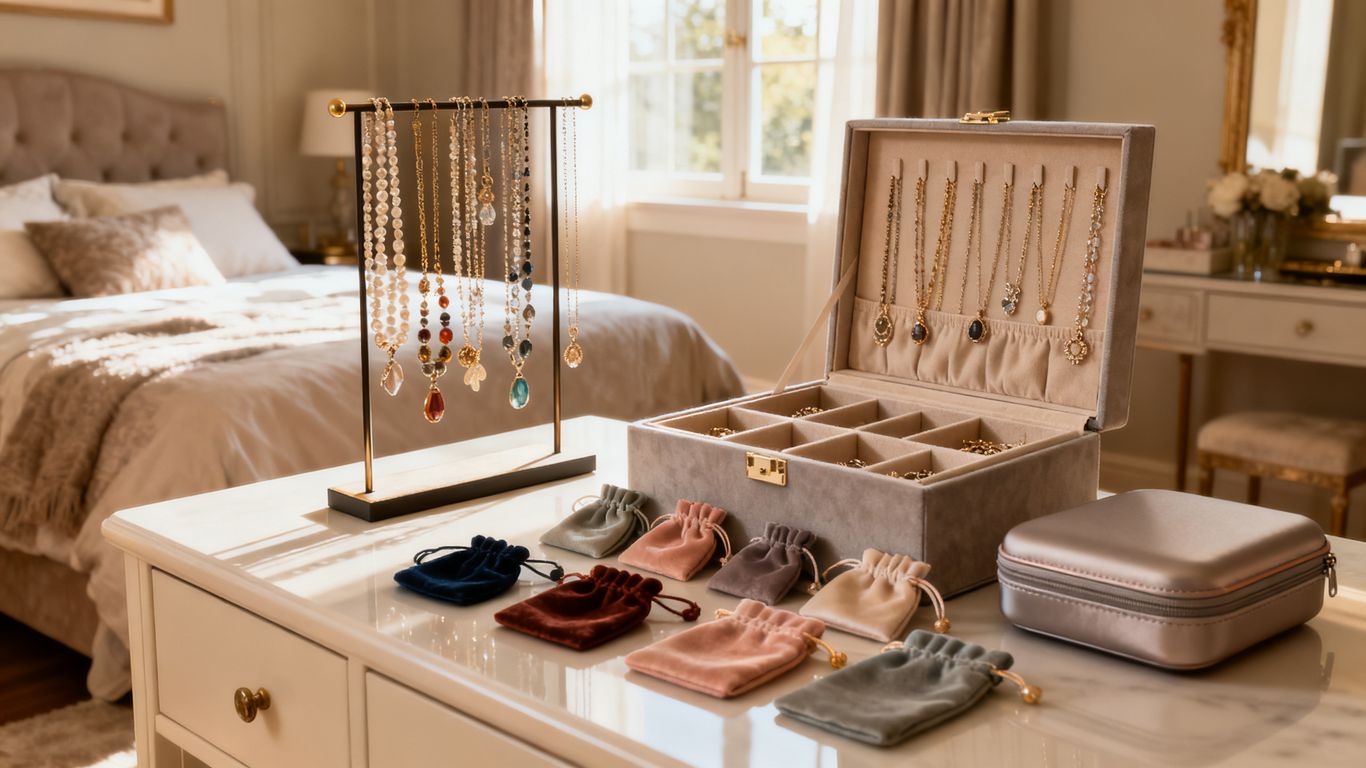
Key Takeaways
A few small storage habits can make delicate chains much easier to manage. The goal is to keep each necklace still, separated, and protected from unnecessary friction.
- Fasten every clasp before putting a necklace away.
- Give long chains more space than short chains.
- Use compartments, hooks, or individual pouches to keep necklaces separate.
- Pack travel jewelry in a case that prevents movement.
- Clean and inspect necklaces before storing them for a long period.
- Why Do Necklaces Tangle So Easily?
- The Best Necklace Storage Solutions
- Tips for Preventing Tangles Before Storage
- Caring for Your Necklaces
- Conclusion: Say Goodbye to Tangled Necklaces!
- Conclusion
- Frequently Asked Questions
- What is the best way to store chains?
- How can I prevent jewelry from tangling in a drawer?
- Should necklace clasps be closed during storage?
- Are jewelry boxes good for long necklaces?
- How should I pack necklaces for travel?
- Can I store different necklace lengths together?
- How do I loosen a necklace knot safely?
Why Do Necklaces Tangle So Easily?
Necklaces tangle because their chains are flexible, light, and quick to catch around one another. Once several pieces are placed together, a small amount of movement can turn loose loops into tight knots. This is especially common with fine chains, long pendants, and necklaces with uneven lengths.
Storage containers can make the problem worse when necklaces are tossed into one open compartment. Opening and closing a drawer, moving a jewelry box, or carrying a case in a bag gives the chains opportunities to slide across each other. The best way to store chains is to limit that movement rather than relying on careful untangling later.
Tangles are more than a nuisance. Repeated pulling can stress a delicate chain, catch a pendant, or bend a clasp. If you are building a collection, necklace organization ideas can help you think about storage at the same time as style and occasion. A simple system is often enough to prevent jewelry from tangling on busy mornings.
The Best Necklace Storage Solutions
The right storage method depends on how many necklaces you own, how often you wear them, and how much space you have. A small collection may need only a divided tray, while a larger collection benefits from vertical storage. Choose a setup that lets you see each piece without having to lift a pile of chains.
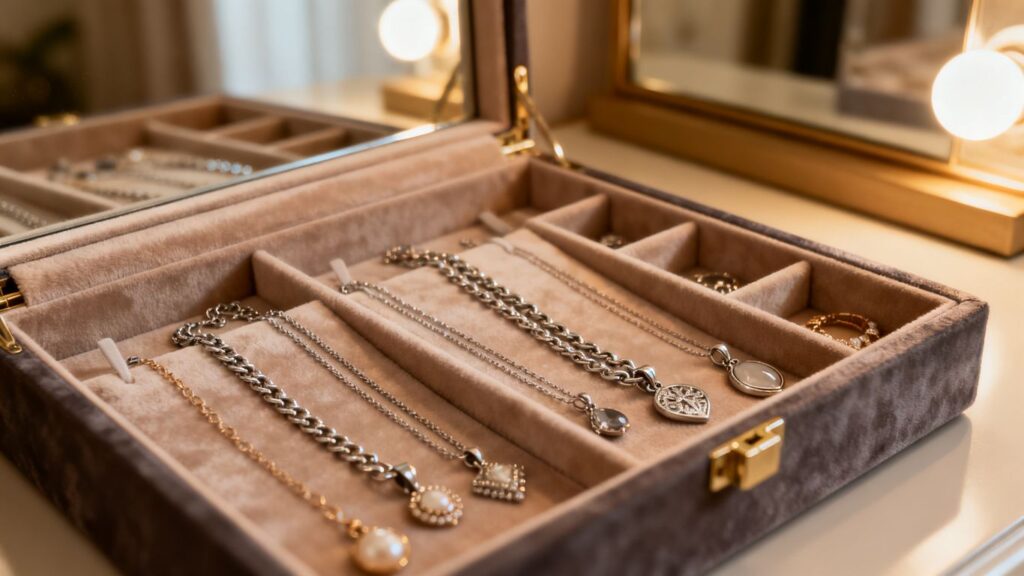
Jewelry Boxes with Dedicated Compartments
A jewelry box with separate compartments gives each necklace a defined place. Look for sections that are long enough for your chains, lined surfaces that are gentle on the jewelry, and enough depth for pendants to lie flat. Small hooks or necklace rolls inside the box can add another layer of separation.
For a growing collection, a larger box may be more practical than several small containers. A guide to large jewellery boxes can be useful when comparing drawers, compartments, and overall capacity. Avoid filling every section so tightly that chains spill into neighboring spaces when the lid closes.
The following quick comparison can help match a storage style to a typical need:
| Storage option | Best for | Main advantage | Watch for |
|---|---|---|---|
| Divided jewelry box | Small to medium collections | Keeps pieces covered and separated | Compartments may be too short for long chains |
| Necklace hooks | Long necklaces and pendants | Prevents chains from lying in a pile | Requires a stable, accessible location |
| Individual pouches | Delicate or occasional pieces | Limits contact and movement | Pieces can be harder to see |
| Travel jewelry case | Trips and short-term packing | Combines separation with portability | Overpacking can still cause knots |
A box works best when necklaces are fastened and placed in their own sections rather than layered together. If a compartment is not long enough, use it for shorter chains and reserve another method for longer pieces.
Hanging Organizers for Walls or Closets
Hanging storage is a practical choice for necklaces that are long, pendant-heavy, or worn frequently. Hooks let the chains hang straight, making it easier to spot a particular piece and less likely that it will become buried under another one. A closet door, wardrobe side panel, or small wall-mounted rail can all work if the surface is secure.
Keep enough distance between hooks for pendants to hang without touching. The organizer should also be placed away from areas where clothing, bags, or hands will regularly brush against the jewelry. A tidy display is useful, but protection and easy access matter more than decoration.
DIY Solutions: From Pegboards to Picture Frames
A pegboard, shallow tray, or repurposed picture frame can become a simple necklace organizer. Add small hooks or pins at even intervals, then leave enough vertical room for the longest pendant. Smooth, finished materials are preferable to rough wood or exposed edges that could catch a chain.
DIY storage is especially helpful when you want to adjust the layout as your collection changes. You can group pieces by length, color, or how often you wear them. If making accessories interests you too, these handmade jewelry ideas offer a related creative project, though the storage method itself should remain sturdy and snag-free.
Test the organizer with one or two inexpensive pieces before hanging treasured necklaces. That small trial can reveal whether hooks loosen, the frame tips forward, or pendants knock against the wall.
Travel-Friendly Necklace Storage
Travel creates extra movement, so loose necklaces in a suitcase are particularly likely to knot. A compact jewelry roll or case with separate sections can keep chains in place while remaining easy to pack. Threading a necklace through a small straw or card can also reduce loose loops when a dedicated case is not available.
Keep the case near the top of your luggage rather than beneath shoes or heavy clothing. The travel jewelry packing tips are a useful companion when you are deciding how to separate necklaces, earrings, and other small pieces. Pack only what you expect to wear, and avoid squeezing several chains into one pocket.
Once you arrive, take the necklaces out of the case and place them on a secure surface or hang them up. Leaving them compressed in a travel pouch for days can create unnecessary bends and makes it harder to notice a loose clasp.
Tips for Preventing Tangles Before Storage
Good storage begins before the necklace reaches its box or pouch. A few seconds spent closing clasps, checking the chain, and choosing the right location can prevent a frustrating knot later. These habits also make it easier to notice damage before a necklace is worn again.
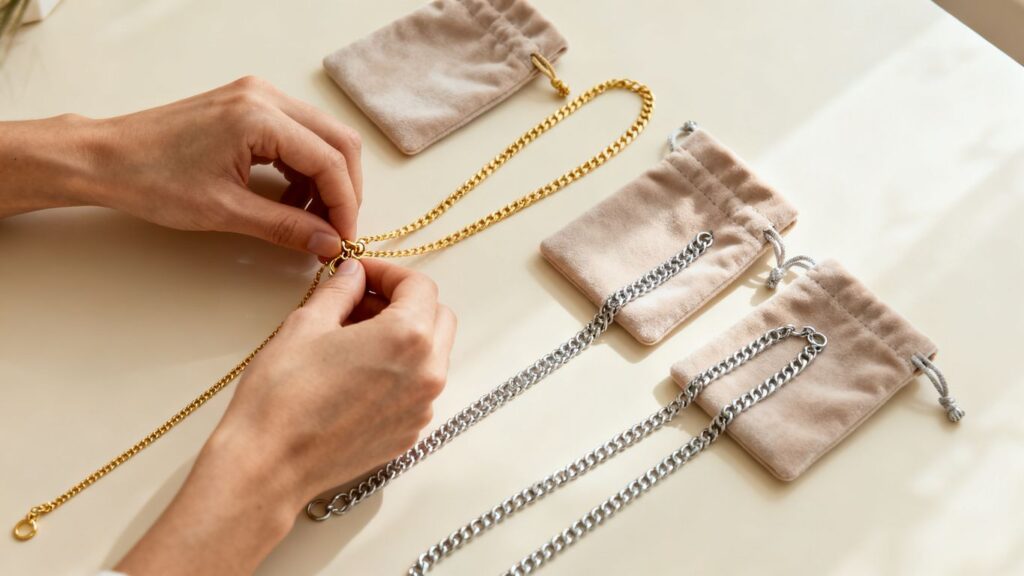
Fasten Clasps Before Storing
Close the clasp and let the chain settle into a loose, straight line before putting it away. A fastened necklace has fewer open ends to catch on neighboring chains or the lining of a pouch. Do not pull the chain taut; the aim is to prevent loose loops while keeping pressure off the links.
If the clasp feels loose, stiff, or difficult to close, set the necklace aside for inspection rather than forcing it. BuyJewelleryOnline.net provides jewelry reviews and buying advice, and that practical perspective can also encourage shoppers to consider clasp quality when choosing new pieces.
Separate Long and Short Chains
Different lengths naturally overlap when they share a small space. Place long necklaces on hooks or in long compartments, and keep shorter chains in divided sections where their pendants cannot spill over. This simple separation is one of the easiest ways to keep necklaces separate without buying a large organizer.
Use these groupings when sorting a drawer or box:
- Short chains with small pendants
- Medium-length necklaces for everyday wear
- Long chains and layered styles
- Heavy pendants that need extra room
After sorting, leave a little spare space around each group. The list is not a rigid rule, but it gives every necklace a starting place and reduces the temptation to stack pieces together.
Consider Individual Pouches or Bags
Soft individual pouches are helpful for delicate, valuable, or rarely worn necklaces. Place one fastened necklace in each pouch, allow the pendant to rest flat, and avoid stuffing the pouch so full that the chain bends sharply. Clear sleeves can make occasional pieces easier to identify, while opaque fabric offers more privacy and protection from light.
Individual storage is also useful for pieces with textures or pendants that might catch on a neighboring chain. BuyJewelleryOnline.net covers jewelry storage solutions alongside its broader buying advice, so storage can be considered as part of caring for a collection rather than an afterthought.
Labeling pouches by occasion or length can save time, but keep labels on the outside and leave the necklace itself free of adhesive or rough tags. The simpler the interior, the less likely it is to snag a fine chain.
Caring for Your Necklaces
Storage cannot replace basic care. Before putting a necklace away, wipe away skin oils, perfume residue, or makeup with a soft, clean cloth suited to the piece. Let it dry fully before closing it inside a pouch or box, since trapped moisture can leave some materials looking dull.
Handle delicate chains by the clasp or a sturdier section instead of pulling on the pendant. If a knot does appear, place the necklace on a flat surface and loosen it gently with a pair of blunt pins; rushing usually tightens the knot. For valuable or particularly fragile pieces, professional help is safer than repeated force.
Inspect clasps, jump rings, and thin sections from time to time. A small weakness is easier to address before the necklace is worn or packed away. BuyJewelleryOnline.net is designed to provide jewelry buying advice and reviews, which can help shoppers make more informed choices about pieces and their upkeep without treating every necklace as if it needs the same routine.
Conclusion: Say Goodbye to Tangled Necklaces!
Learning how to store necklaces without tangling is mostly a matter of reducing movement and contact. Fastened clasps, separated lengths, and a suitable box or hanging organizer can turn a messy drawer into a calm, usable collection.
Choose one change that fits your space today, whether that means adding hooks, dividing a drawer, or giving each delicate chain its own pouch. Once every necklace has a dependable place, putting jewelry away becomes a quick habit instead of a daily puzzle.
A little room, gentle handling, and occasional inspection will help your necklaces stay ready to wear. The best storage system is the one you can maintain easily, even on a rushed morning.
Conclusion
With a few thoughtful habits, tangled necklaces become an occasional problem rather than part of your routine. Give each chain enough space, close its clasp, and choose storage that suits the way you actually wear and care for your jewelry.
Frequently Asked Questions
What is the best way to store chains?
The best way to store chains is to fasten each clasp and place each necklace in a separate compartment, pouch, or hanging position. Choose the method that keeps the chain still and gives longer pieces enough room.
How can I prevent jewelry from tangling in a drawer?
Use dividers or small pouches, group necklaces by length, and avoid piling several pieces into one section. Leave a little space so chains do not spill across the dividers when the drawer moves.
Should necklace clasps be closed during storage?
Yes. Closing the clasp reduces open ends and loose loops that can catch on other necklaces or the storage lining. Close it gently rather than pulling the chain tight.
Are jewelry boxes good for long necklaces?
They can be, provided the box has compartments or hooks long enough for the necklaces. If a chain must be folded repeatedly or pushed into a short section, hanging storage may be more suitable.
How should I pack necklaces for travel?
Use a travel jewelry case or roll with separate sections, and keep the packed case near the top of your luggage. Avoid putting multiple loose chains into one pocket or placing heavy items on top of them.
Can I store different necklace lengths together?
You can, but separating short, medium, and long necklaces greatly reduces overlap. If they must share a container, use dividers and make sure pendants cannot cross into another chain’s space.
How do I loosen a necklace knot safely?
Lay the necklace flat and work gently at the outer loops with blunt pins or a similar fine tool. Do not yank the pendant or pull both ends forcefully; a stubborn or fragile knot may need a jeweler’s help.
