Key Takeaways
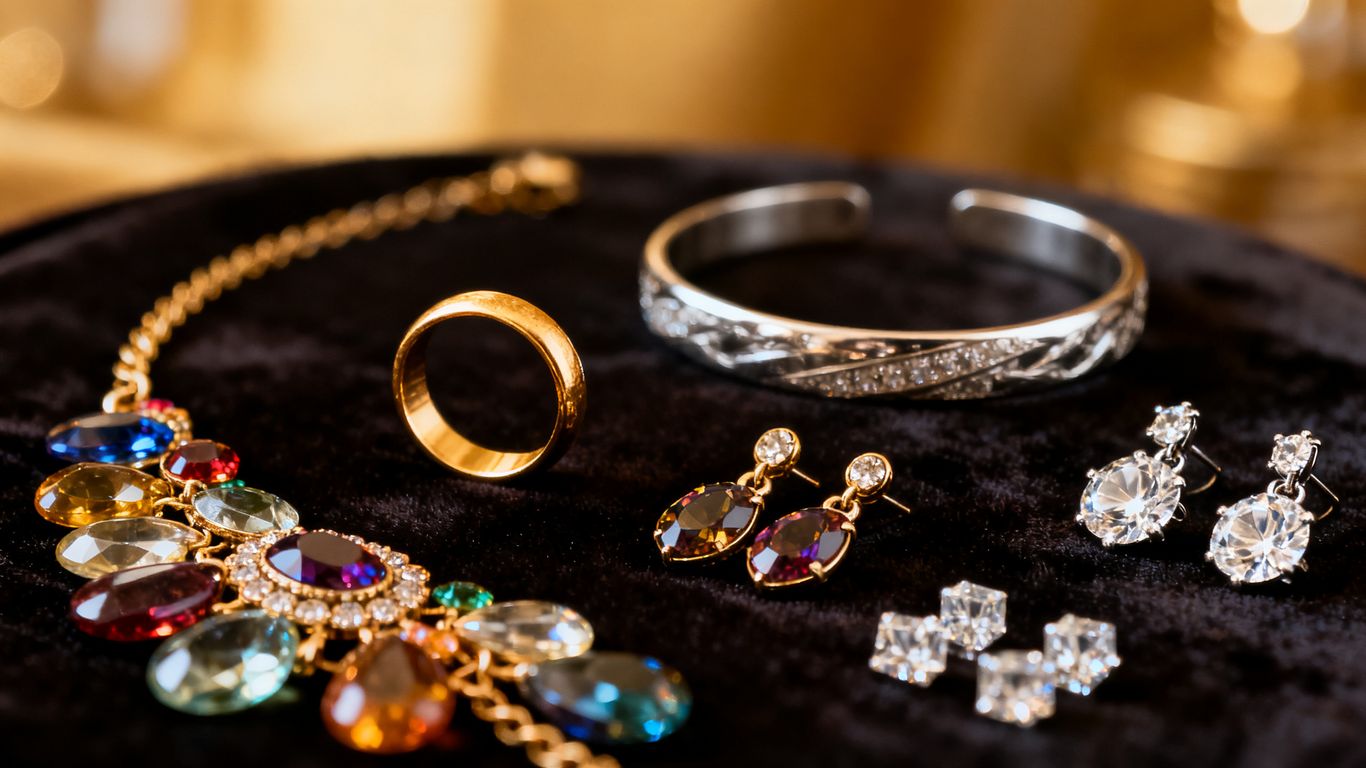
Real jewellery is made with precious metals and genuine gemstones, while imitation jewellery uses affordable materials to recreate a similar look.
- Real jewellery generally offers greater durability, longevity, and resale potential.
- Imitation jewellery makes changing trends and statement styles more accessible.
- Plating, stone setting, and finishing affect the quality of an imitation piece.
- Hallmarks, certifications, and careful inspection help when learning how to tell fake gold.
- The right choice depends on your budget, occasion, styling habits, and care routine.
- Understanding the Basics: What is Real Jewellery?
- The World of Imitation Jewellery
- Key Differences: Durability and Longevity
- Cost Comparison: Investment vs. Affordability
- Identifying Real vs. Fake: Tips and Tricks
- When to Choose Which: Occasion and Style
- Conclusion
- Frequently Asked Questions
- Is artificial jewellery the same as imitation jewellery?
- Is imitation jewellery real jewellery?
- How long does imitation jewellery last?
- Can imitation jewellery cause skin irritation?
- What is the easiest way to tell fake gold?
- Is real jewellery always a good investment?
- How should imitation jewellery be stored?
Understanding the Basics: What is Real Jewellery?
Real jewellery usually contains precious metals or genuine gemstones, although quality and value can still vary widely within those categories. A gold ring, for example, may have different purity levels, while a natural gemstone can differ in colour, clarity, and treatment. The word “real” does not automatically mean flawless or exceptionally valuable. It means the central materials are not merely designed to imitate a precious alternative.
Precious Metals: Gold, Silver, Platinum
Gold, silver, and platinum are the metals most commonly associated with fine jewellery. Gold is often mixed with other metals to make it harder and more practical for daily use; its purity is expressed in karats. Silver is bright and versatile but can tarnish, while platinum is dense, naturally white, and often chosen for pieces expected to withstand regular wear.
When shopping, look for clear information about metal purity rather than relying only on colour or weight. A yellow finish can come from solid gold, gold plating, or a coloured alloy, so appearance alone is not enough. For readers comparing options in India and elsewhere, BuyJewelleryOnline.net provides reviews and buying advice that can help frame questions about materials, pricing, and care.
Genuine Gemstones: Diamonds, Rubies, Emeralds
Genuine diamonds, rubies, and emeralds form naturally, though some may receive treatments and many modern jewellery pieces use laboratory-grown stones. Their price depends on factors such as size, colour, clarity, cut, origin, and documented treatment. A genuine stone is therefore not defined by a single visual trait, and even experienced buyers may need professional assessment.
Natural zircon is another gemstone worth distinguishing from cubic zirconia. It has its own colour range, sparkle, and care considerations, while cubic zirconia is a manufactured diamond lookalike commonly used in fashion pieces. A stone report from a reputable gem laboratory can provide more useful evidence than a seller’s description alone.
The World of Imitation Jewellery
Imitation jewellery is made to resemble fine jewellery, usually through affordable metals, synthetic stones, glass, or decorative finishes. Artificial vs imitation jewellery is a useful distinction: artificial jewellery is the broader category, while imitation jewellery specifically aims to copy the appearance of precious pieces. Both can be stylish choices, but neither should be assessed by shine alone.
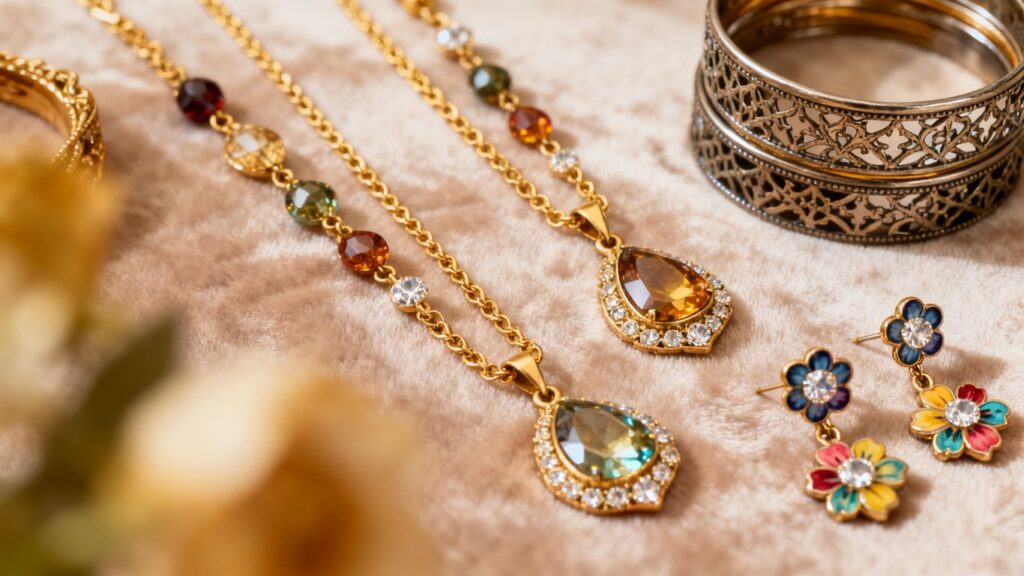
The appeal is straightforward. A lower price can make it easier to try bold shapes, wear coordinated sets, or choose a different accessory for each outfit without treating every purchase as a long-term investment.
Materials Used: Alloys, Glass, Cubic Zirconia
Base metals such as brass, copper, stainless steel, and mixed alloys are common in fashion jewellery. Glass and synthetic stones can create colour and sparkle, while cubic zirconia is often cut to resemble a diamond. Beads, enamel, resin, and wood also appear in artificial designs that may be expressive without pretending to be fine jewellery.
These choices are not automatically a sign of poor workmanship. The feel of the piece depends on the alloy, the accuracy of the setting, the smoothness of edges, and how securely components are joined. Anyone researching fashion jewelry materials should also check whether the item may cause skin irritation and whether the seller explains its care requirements.
A useful starting point is this costume jewelry guide, which places base metals, glass, and decorative stones in the wider context of accessible jewellery. That context makes it easier to judge a piece for what it is, rather than comparing it unfairly with solid gold or natural gemstones.
Plating and Finishes: The Illusion of Value
Plating places a thin decorative layer over another material, creating the colour of gold, silver, or another finish at a lower cost. The result can look convincing when new, but the thickness of the plating, the quality of the base, and the way the item is worn all affect how long that appearance lasts. Polished surfaces, antique finishes, enamel, and textured details can also change how a piece catches the light.
A well-finished imitation piece may look refined without having investment value. Check the clasp, back of the pendant, stone seats, and connecting points, since these areas often reveal whether production was careful. In discussions of replica jewelry quality, construction details usually tell you more than a dramatic product photograph.
Key Differences: Durability and Longevity
Fine jewellery generally handles repeated wear better because precious metals and securely set genuine stones can be repaired, polished, or restored. That does not make every real piece indestructible: gold can scratch, silver can tarnish, and gemstones can chip. Regular contact with perfume, sweat, chemicals, and rough surfaces affects all jewellery.
Imitation jewellery tends to be more vulnerable to fading, tarnishing, loose stones, and surface wear, especially when plating is thin or the item is worn constantly. Moisture and friction can speed up these changes. Storing pieces separately, wiping them after use, and keeping them away from sprays can extend their attractive appearance.
The difference is best understood as a matter of expected service and repairability, not as a simple divide between good and bad. Real jewellery may justify a higher price when you want a piece to pass through generations, while imitation jewellery may be perfectly sensible for occasional wear and fast-changing styles. BuyJewelleryOnline.net focuses on reviews and buying advice, which is useful when comparing care needs alongside appearance.
Cost Comparison: Investment vs. Affordability
The price of real jewellery reflects material value, craftsmanship, gemstone characteristics, labour, design, and sometimes brand or provenance. Precious metal prices can move over time, but a purchase is not automatically a profitable investment. Resale depends on purity, condition, demand, documentation, and the difference between a shop’s selling and buying prices.
Imitation jewellery has a much lower material cost, so more of the price may relate to design, labour, finishing, packaging, and retail overhead. This makes it one of the most practical affordable jewelry alternatives for wedding guests, festival outfits, travel, and experimental styling. However, low price alone does not confirm good quality; two pieces with similar designs can differ in plating and construction.
Here is a broad comparison rather than a promise of fixed pricing:
| Feature | Real jewellery | Imitation jewellery |
|---|---|---|
| Main materials | Precious metals and genuine gemstones | Alloys, plating, glass, and synthetic stones |
| Typical purpose | Long-term ownership and special milestones | Trend-led styling and occasional wear |
| Repair potential | Often polishable, repairable, or resettable | Usually more limited and material-dependent |
| Resale potential | May retain some material or market value | Usually limited once worn or damaged |
The practical choice comes down to what you want the purchase to do. BuyJewelleryOnline.net offers buying advice and reviews for shoppers weighing fashion, budget, and long-term value rather than treating every jewellery purchase as an investment.
Identifying Real vs. Fake: Tips and Tricks
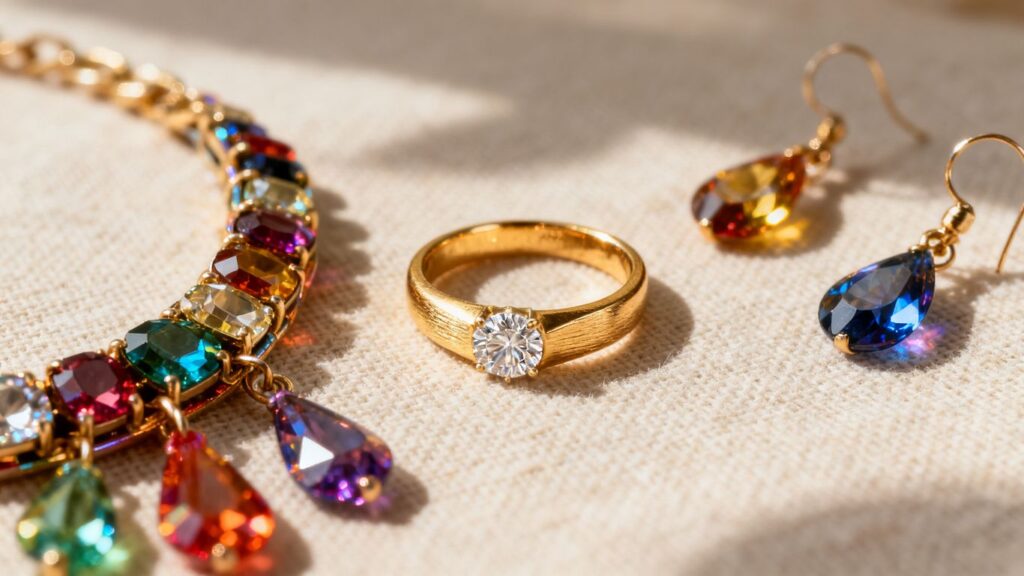
No single home test can prove that a piece is genuine, and some popular tests can scratch or damage jewellery. A careful buyer combines seller information, physical markings, construction clues, and independent documentation. When a purchase is expensive, professional testing is safer than relying on an internet trick.
Hallmarks and Certifications
Hallmarks can indicate metal purity, a maker, or an official testing standard, depending on the country. They should be small, clear, and consistent with the seller’s description, but a stamp by itself is not absolute proof because counterfeit marks exist. For diamonds and other valuable gemstones, an independent laboratory report can describe characteristics that are difficult to judge by eye.
Ask for an invoice that states the metal type, purity, stone details, weight, and treatment information where relevant. If the seller avoids basic questions or offers a price that seems disconnected from the material, pause before buying. BuyJewelleryOnline.net provides reviews and buying advice, but the final verification of a high-value item should come from recognised testing or appraisal services.
Visual and Tactile Clues
Colour that looks unnaturally uniform, rough edges, weak clasps, uneven plating, and poorly aligned stones can suggest rushed construction. Yet polished imitation pieces may avoid many of these clues, and genuine jewellery can also show wear or imperfect handmade details. Use these observations to raise questions, not to make a definitive diagnosis.
A simple inspection routine is more reliable than a quick glance:
- Check the description for metal purity and stone details.
- Inspect clasps, solder points, backs, and prongs under good light.
- Compare the item’s weight and finish with the seller’s stated materials.
- Look for a clear return policy and an itemised invoice.
After that check, consider whether the evidence matches the price and the setting in which you plan to wear it. The imitation and artificial jewellery comparison also helps clarify why a non-precious piece can copy a fine-jewellery look without being made from the same materials.
When to Choose Which: Occasion and Style
Real jewellery makes sense for milestones, heirlooms, engagement pieces, and purchases where material value or long-term repair matters. It can also carry cultural meaning, particularly when gold is given for weddings, festivals, or family occasions. Choose based on verified purity and a design you will genuinely wear, not only on the promise of future appreciation.
Imitation jewellery suits occasions where variety matters more than permanence. A statement necklace for a single celebration, colourful earrings for a seasonal wardrobe, or a coordinated set for a costume can all be sensible choices. The comparison of costume jewelry vs fine jewelry is really a comparison of purpose: expressive and accessible styling on one side, enduring material value and longevity on the other.
Think about comfort, frequency of wear, storage, and exposure to water before deciding. If you change accessories often, affordable pieces may offer more creative freedom; if you want one dependable item for years, real jewellery may be the better fit. Shopping online also calls for careful photos, material descriptions, reviews, and return terms, especially when the finish may be difficult to judge on a screen.
Conclusion
Real and imitation jewellery serve different needs, and neither choice is automatically right for every buyer. Learn what the materials are, inspect the finish, check documentation, and match the piece to the occasion and your care habits. With that approach, you can enjoy genuine jewellery for its lasting value and imitation designs for their accessible, flexible style.
Frequently Asked Questions
Is artificial jewellery the same as imitation jewellery?
Not exactly. Artificial jewellery is a broad term for pieces made without precious materials, while imitation jewellery specifically refers to designs intended to resemble fine jewellery.
Is imitation jewellery real jewellery?
Imitation jewellery is real as a physical product, but it is not fine jewellery made primarily from precious metals and genuine gemstones. It is designed to provide a similar appearance at a lower cost.
How long does imitation jewellery last?
Its lifespan depends on the base material, plating, construction, frequency of wear, and exposure to moisture or chemicals. Careful storage and gentle cleaning can help preserve its finish.
Can imitation jewellery cause skin irritation?
It can, particularly when a wearer is sensitive to certain base metals or when plating has worn away. Check the material description and stop wearing a piece if irritation develops.
What is the easiest way to tell fake gold?
Look for reliable purity information, appropriate hallmarks, a detailed invoice, and professional testing when the value is significant. Colour and home tests alone cannot establish authenticity with certainty.
Is real jewellery always a good investment?
No. Value and resale depend on purity, condition, design, gemstone characteristics, documentation, demand, and market conditions. A purchase should not be treated as an investment without researching those factors.
How should imitation jewellery be stored?
Keep pieces dry, wipe them gently after wear, store them separately to reduce scratches, and avoid perfume, lotions, and household chemicals. A soft-lined box or pouch can help protect the finish.